

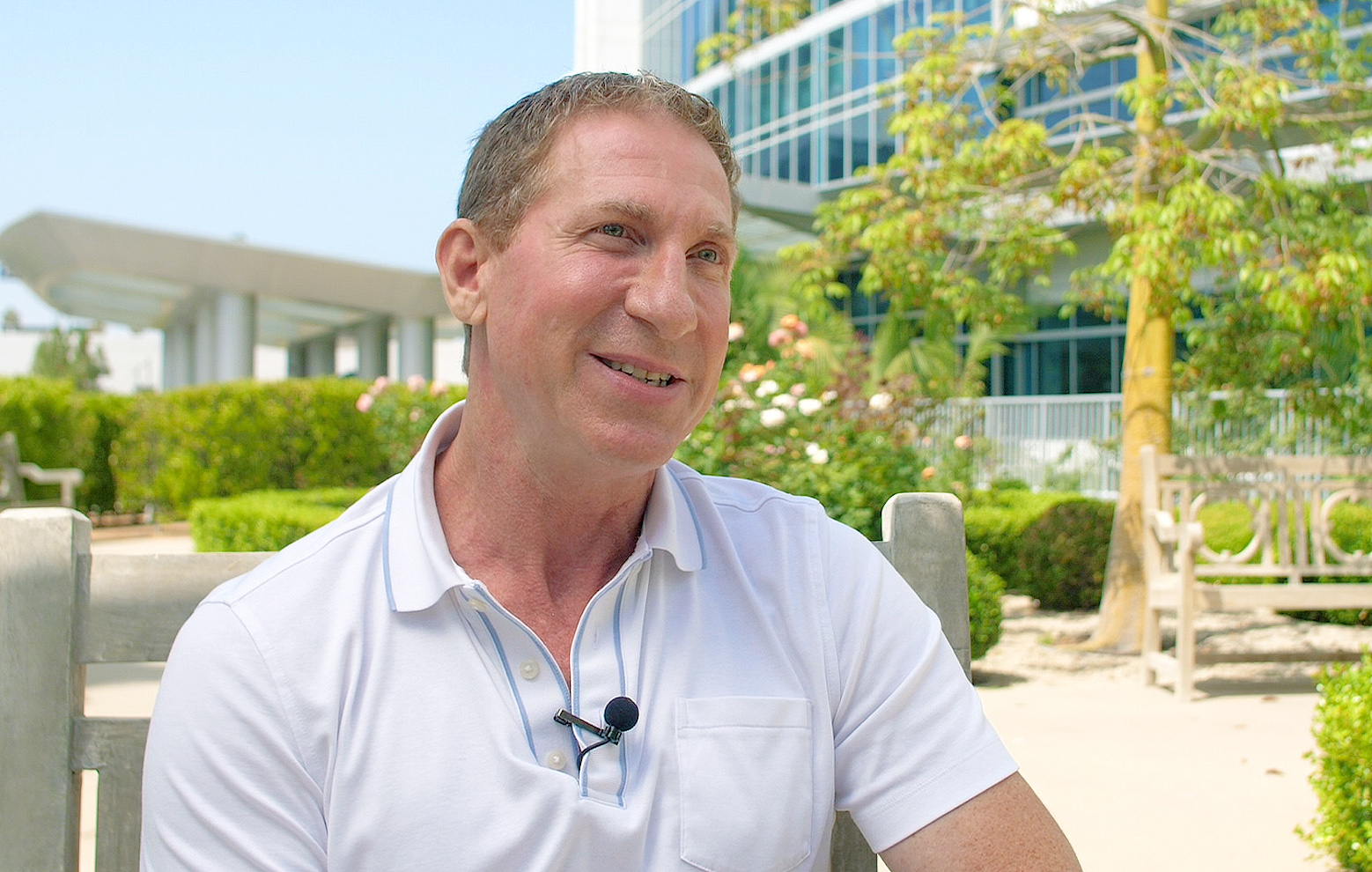
John Santoliquido’s 25-Year Journey With Metastatic Melanoma
When John Santoliquido was first diagnosed with melanoma in 1997, the treatment options available for advanced disease were very different from those used today. Over the following 25 years, John experienced multiple phases of cancer care, including an extended period between diagnoses, treatment for melanoma that later appeared in his lung, and the development of newer immunotherapies. In this original August 2022 patient testimonial, John reflects on his relationship with surgical oncologist Richard Essner, MD, the influence of the late Donald L. Morton, MD, and why participating in his own treatment decisions has remained so important.
John’s story is about more than the passage of time. It documents the evolution of melanoma care through the experience of a patient who witnessed changes in immune-based treatments while maintaining a long-standing relationship with his physicians.
At the time of his 2022 interview, John reported that he was no longer receiving immunotherapy and continued to return for follow-up examinations. These statements describe his circumstances when the interview was recorded and should not be interpreted as a current update about his health.
A Melanoma Diagnosis in 1997 and a Lasting Relationship With His Physicians
John’s melanoma journey began in 1997, when cancer was identified in the groin region and physicians traced the primary melanoma to his left calf. His original account describes a diagnosis that eventually involved advanced disease and required ongoing care.
He received treatment through the team associated with Donald L. Morton, MD, and Richard Essner, MD, whose work in melanoma surgery and clinical research became an important part of John’s medical history.
Dr. Morton, who died in 2014, helped advance the use of sentinel lymph node biopsy in melanoma and investigated immunotherapy approaches over several decades. Dr. Essner worked alongside him and subsequently continued caring for patients with melanoma through Saint John’s Cancer Institute and other clinical settings.
John’s relationship with Dr. Essner continued even during changes in the physician’s institutional affiliation. When Dr. Essner returned to Providence Saint John’s Health Center, John described the importance of returning to a familiar clinical environment.
“It’s just nice being back here at this location because it really is a whole group working together for my best outcome,” John explains in his original video testimonial.
His experience highlights the value that some patients place on long-term physician relationships, particularly when treatment extends over many years and includes difficult decisions about recurrence and ongoing surveillance.
Watch John Share His Metastatic Melanoma Journey
In this original August 2022 interview, John reflects on his diagnosis, treatment experiences, and relationship with the physicians who cared for him. He also discusses the practical importance of asking questions and finding a treatment approach that considers personal goals and quality of life.
His account offers a historical perspective on the changes in melanoma treatment between the late 1990s and the modern immunotherapy era.
John Santoliquido Discusses 25 Years of Melanoma Care at Saint John’s
John Santoliquido shares his experience with metastatic melanoma, immunotherapy, and long-term care at Saint John’s Cancer Institute in Santa Monica, California. Original interview: August 2022.
Can Metastatic Melanoma Recur After Many Years?
Melanoma can sometimes return after a prolonged period without detectable disease. Although some melanomas progress rapidly, others may recur many years after initial treatment. The timing of recurrence varies and cannot reliably be predicted for an individual patient.
John experienced a particularly long interval before a subsequent melanoma metastasis was identified in his right lung in 2018. This recurrence occurred approximately two decades after his original diagnosis.
Kim Margolin, MD, a medical oncologist specializing in melanoma at Saint John’s Cancer Institute, discussed the limitations of describing metastatic melanoma as slow-growing:
“There is no precise way to measure the rate of growth of metastatic melanoma,” explains Dr. Kim Margolin. “We just use terms like that when it seems like a very long time between one crop of metastases and the next one.”
The interval between John’s initial diagnosis and his lung recurrence was unusual, but the length of time between recurrences does not necessarily indicate how quickly individual melanoma cells were growing throughout that period.
Understanding Melanoma That Spreads to the Lung
When melanoma spreads from its original location to a distant organ such as the lung, it is considered metastatic melanoma. The cancer cells remain melanoma cells even though they are found outside the skin.
Melanoma may spread through lymphatic channels or the bloodstream. Distant metastases can develop in organs such as the lungs, liver, brain, or other tissues and may not always cause noticeable symptoms when first discovered.
Stage IV melanoma refers to disease that has spread to distant sites. The precise stage at an earlier point in a patient’s history depends on the clinical and pathological findings available at that time.
For this reason, John’s initial diagnosis and later lung recurrence should not be treated as interchangeable staging events. His original patient account describes the progression of his disease, but the details needed to reconstruct every historical staging decision are not available in this article.
Learn more about Melanoma Diagnosis, Staging, and Treatment.
The Role of the Immune System
Immune responses can influence how cancers develop and respond to treatment. Melanoma is particularly important in the history of cancer immunotherapy because some patients develop durable responses when their immune systems are stimulated or when specific immune checkpoints are blocked.
In discussing John’s long survival, Dr. Margolin described his immune response as “unusually strong against melanoma antigens.”
Her observation reflects the clinical interpretation of John’s individual experience. It does not establish that a specific immune mechanism was solely responsible for his extended survival, nor does it mean that patients can control their outcomes through lifestyle or attitude alone.
Melanoma biology and immune responses vary substantially among patients, which is one reason clinicians consider tumor characteristics, disease extent, prior treatment, and other factors when developing treatment plans.
How Melanoma Immunotherapy Changed Over 25 Years
One of the most significant aspects of John’s experience is the opportunity to compare treatments used in different eras of melanoma care. His original treatment began before modern immune checkpoint inhibitors were available, while his later treatment included nivolumab (Opdivo), which became an established option for advanced melanoma after its initial FDA approval in 2014.
Immunotherapy works by modifying or supporting immune responses against cancer. Different immunotherapies act through different mechanisms, and their effectiveness and adverse effects vary considerably.
Early Immune-Based Treatments and Melanoma Research
During the 1990s, patients with advanced melanoma had fewer effective systemic treatment options than are available today. Immune-based approaches included interferon alfa, interleukin-2 in selected settings, and experimental therapies being evaluated through clinical research.
John’s original account describes early immune-stimulating treatments involving melanoma material and a tuberculosis-related preparation. Historical melanoma research at Saint John’s included work by Dr. Morton involving Bacillus Calmette-Guérin (BCG), an immune stimulant derived from a weakened strain of the bacterium used in tuberculosis vaccination.
The precise components and administration of John’s earlier treatment cannot be fully established from the testimonial alone. His experience nevertheless reflects an era when clinicians and investigators were exploring ways to stimulate immune responses against melanoma.
John’s Experience With Interferon Alfa
John also received interferon alfa, an older immune-based treatment used in melanoma care. He recalled administering injections several times a week and experiencing substantial side effects.
Describing that period, John said, “it was awful.”
Dr. Margolin characterized interferon treatment in the original article as “it was a very weak, very toxic immunotherapy,” reflecting the limitations associated with its clinical use.
Interferon alfa was used in certain melanoma settings before more effective and better-tolerated treatment options became available. It could produce difficult adverse effects, and its role in melanoma care has changed substantially with the development of modern systemic therapies.
John’s experience provides a patient perspective on how treatment burden and quality of life can influence medical decisions.
The Development of PD-1 Checkpoint Inhibitors
In 2014, the U.S. Food and Drug Administration approved nivolumab, marketed as Opdivo, for certain patients with unresectable or metastatic melanoma. Nivolumab belongs to a class of immunotherapies known as PD-1 checkpoint inhibitors.
PD-1 is a receptor found on certain immune cells. When it interacts with specific proteins, it can reduce T-cell activity. Some cancers exploit this pathway to limit immune responses against tumor cells.
Drugs such as nivolumab block the PD-1 pathway, allowing immune cells to respond more effectively against cancer in some patients. These treatments have improved outcomes in selected melanoma populations, although not everyone responds and potentially serious immune-related side effects can occur.
The development of checkpoint inhibitors represented an important change from the treatments available when John was first diagnosed.
John’s Treatment With Opdivo Following His 2018 Recurrence
After melanoma was identified in his right lung in 2018, John received nivolumab for approximately one year, according to his original account.
He described a marked difference between this treatment experience and his earlier interferon therapy. In the 2022 interview, John reported relatively mild side effects with nivolumab compared with the difficulties he had experienced during previous treatment.
His experience was encouraging, but it should not be interpreted as evidence that nivolumab has minimal side effects for every patient. Immune checkpoint inhibitors can cause inflammation involving the skin, intestines, lungs, liver, endocrine glands, or other organs, sometimes requiring treatment to be interrupted or discontinued.
In his August 2022 account, John reported that he was no longer receiving immunotherapy and continued to attend follow-up visits. No information about his subsequent treatment or disease status is established by that interview.
Learn more about Immunotherapy for Melanoma at Saint John’s Cancer Institute.
The Importance of Individualized Treatment Decisions
John’s story illustrates how treatment decisions may reflect a patient’s medical circumstances, personal priorities, and preferences regarding potential side effects. He valued maintaining his lifestyle and wanted to understand whether alternatives were available when considering treatments for melanoma.
He discussed his concerns with his care team and remained involved in decisions as treatment options changed over time.
Looking back on his relationship with the physicians who cared for him, John said, “They have kept me alive since 1997, so I put my life in their hands at anytime.”
His words communicate the trust he developed through years of care, while his experience also demonstrates the importance of patients asking questions and understanding the options available to them.
The Role of Multidisciplinary Melanoma Care
Patients with melanoma may receive care from surgical oncologists, medical oncologists, dermatologists, radiologists, pathologists, and other specialists. Treatment decisions depend on disease stage, tumor characteristics, prior therapy, and the patient’s goals.
Surgery remains important for selected melanoma cases, while immunotherapy, targeted therapy, radiation, and clinical trials may be considered according to the clinical circumstances.
Care coordination can be particularly valuable for patients with advanced or recurrent melanoma who require treatment over an extended period.
Why Patient Advocacy Matters
Patients may find it helpful to ask about the purpose of treatment, expected benefits, potential side effects, other available approaches, and whether a clinical trial is relevant to their diagnosis.
Seeking clarification or a second opinion does not mean rejecting medical expertise. It can be part of developing a shared understanding between patients and their clinicians, especially when decisions involve uncertainty or competing priorities.
John summarized his approach in the original testimonial:
You have to be your own advocate as far as asking all the questions you can.
– John Santoliquido, August 2022 interview
His advice reflects the value of communication and participation in medical decisions. Patients should be encouraged to ask questions while recognizing that cancer outcomes are determined by multiple biological and clinical factors, not by personal determination alone.
A Patient’s Perspective on Long-Term Melanoma Care
John’s 25-year treatment history shows how the experience of living with melanoma can change over time. Between his original diagnosis in 1997 and his later treatment with nivolumab, the availability of melanoma therapies changed dramatically.
At the same time, his account demonstrates the personal significance of continuity with a trusted physician and a care team familiar with his medical history.
His story should be understood as an individual experience rather than a prediction for others diagnosed with metastatic melanoma. Some patients achieve prolonged periods without detectable disease, while others experience progression or recurrence despite appropriate treatment.
For a broader discussion of treatment options, visit the Melanoma Treatment Program at Saint John’s Cancer Institute.
Melanoma Research and Patient Care at Saint John’s
The Borstein Family Foundation Melanoma Program at Saint John’s Cancer Institute brings together clinical care and research focused on melanoma and other cutaneous malignancies. The program includes expertise in surgical oncology, medical oncology, immunotherapy, and clinical trials.
Richard Essner, MD, and Kim Margolin, MD, have contributed to the program’s surgical and medical oncology activities, respectively, along with other specialists and research professionals.
Patients can learn about the Melanoma Center of Excellence, review currently listed clinical trials, or explore the Immunotherapy for Melanoma treatment page.
John Santoliquido’s Melanoma Journey: Continuity, Research, and Patient Advocacy
John Santoliquido’s August 2022 testimonial documents a 25-year journey involving metastatic melanoma, a long-standing relationship with his surgical oncology team, and the evolution of immunotherapy from older immune-based treatments to modern checkpoint inhibitors. His experience includes a melanoma recurrence in the lung in 2018, treatment with nivolumab, and a personal commitment to asking questions and participating in decisions about his care. The story preserves an important perspective on the history of melanoma treatment at Saint John’s Cancer Institute.
For information about current Melanoma Diagnosis and Treatment, Immunotherapy, or Active Clinical Trials, explore the resources available through the Borstein Family Foundation Melanoma Program at Saint John’s Cancer Institute. Patients can discuss treatment options, second opinions, and specialist evaluation by calling 310-829-8317.
Sources & Further Reading
- National Cancer Institute — Melanoma Treatment: Patient Information
- National Cancer Institute — Melanoma Treatment and Systemic Therapy Evidence
- National Cancer Institute — New Therapies for Advanced Melanoma
- Saint John’s Cancer Institute — Donald L. Morton, MD: Melanoma Research Legacy
- Saint John’s Cancer Institute — Richard Essner, MD
- Saint John’s Cancer Institute — Immunotherapy for Melanoma
- Saint John’s Cancer Institute — Melanoma Center of Excellence