

How Early Detection, Minimally Invasive Technologies, and Team-Based Expertise Are Transforming Outcomes
Welcoming a New Leader in Thoracic Surgery
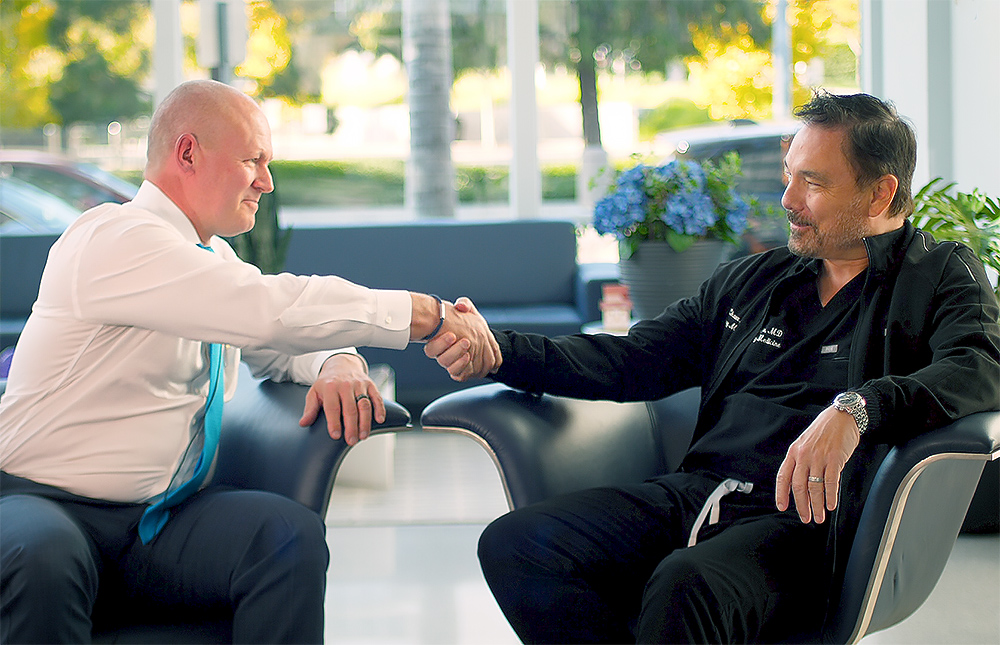
Providence Saint John’s Health Center is proud to welcome Dr. Richard Gillespie, double board-certified thoracic surgeon, to its expanding thoracic and pulmonary team. In a recent conversation with Dr. George Chaux, Director of the Interventional Pulmonary Program, both physicians reflected on the rapid evolution of Saint John’s lung cancer screening and minimally invasive treatment capabilities. “Our program has been growing by leaps and bounds,” Dr. Chaux shared. “We’re diagnosing lung cancers earlier than ever and can now offer patients coordinated access to surgical expertise right when they need it.”
Advanced Lung Cancer Screening and Early Detection
Over the past 18 months, Saint John’s has built a comprehensive lung health program centered on early detection. Through its high-performance lung cancer screening program and 3D-guided robotic bronchoscopy, clinicians can safely biopsy nodules as small as 6–7 millimeters. These minimally invasive technologies allow for more accurate diagnoses at earlier stages—when lung cancer is most treatable.
“What you’ve built here is world-class… Robotic and navigational bronchoscopy truly streamlines diagnosis so patients can move quickly to the right treatment.”
– Richard Gillespie, MD
Multidisciplinary Care Through the Thoracic Tumor Board
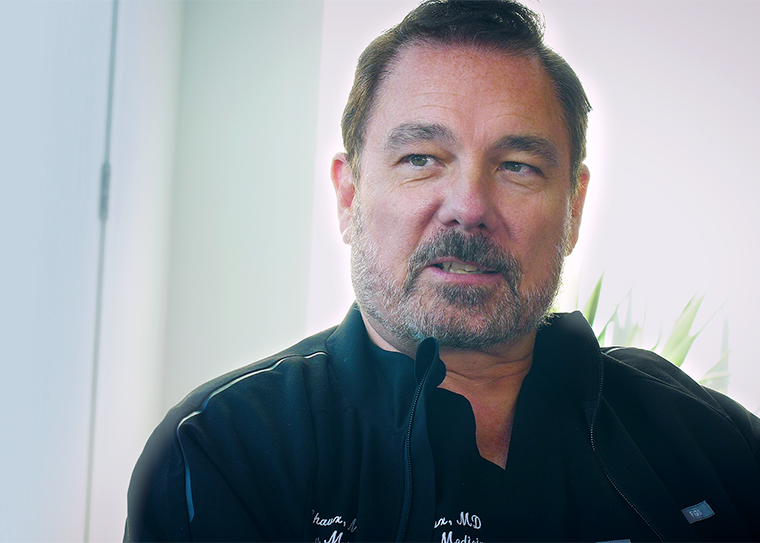
The collaboration extends beyond diagnosis. Together, Dr. Chaux and Dr. Gillespie co-lead the Thoracic Tumor Board, which brings together experts across surgical oncology, pulmonology, medical oncology, radiology, and pathology. “Our patients don’t realize it,” Dr. Chaux explained, “but when their case is presented at tumor board, they’re getting a consult from an entire team of experts.” This multidisciplinary model ensures every patient receives a comprehensive, personalized treatment plan.
Dr. George Chaux Welcomes Dr. Richard Gillesspie to the Thoracic Program
Providence Saint John’s aims to bring the best experts together for the benefit of their patients
Innovations That Shorten Time From Diagnosis to Treatment

A key focus for both physicians is reducing the time between diagnosis and definitive treatment—a period that is often emotionally difficult for patients. Saint John’s is pioneering single-anesthesia care pathways, where a patient may undergo robotic bronchoscopy, biopsy, and potentially surgical resection all in the same session. “Once you know you have cancer, you want it treated immediately,” Dr. Gillespie said.
“If we can offer care that is not only excellent but fast, we improve patients’ lives on every level.”
– Richard Gillespie, MD
Pulse Electric Field (PEF) Ablation: A New Option for Early Lung Tumors

Providence Saint John’s is also the first in Los Angeles County to offer Pulse Electric Field (PEF) Ablation for early-stage lung tumors. PEF is a non-thermal, non-radiation technology that precisely targets tumors while preserving surrounding tissue. “PEF ablation is winning technology,” Dr. Chaux commented. “We’ve evaluated it carefully, and I think it will bring tremendous benefits to patients.” Dr. Gillespie, who has prior experience using PEF, is enthusiastic about expanding this cutting-edge option at Saint John’s.
Key Innovations in Lung Cancer Diagnosis and Treatment
Providence Saint John’s Health Center continues to innovate, advancing its lung program and improving outcomes for lung cancer patients.
- Robotic and 3D-guided bronchoscopy for minimally invasive biopsy
- Early-stage lung cancer screening with low-dose CT
- Single-anesthesia diagnostic and surgical pathways
- Pulse Electric Field (PEF) Ablation for early-stage lung tumors (1st in Los Angeles County)
- Multidisciplinary thoracic tumor board for coordinated expert care
A Unified Vision for Lung Cancer Excellence
Together, Dr. Chaux and Dr. Gillespie are shaping a future where early detection, precision biopsy, multidisciplinary planning, and rapid treatment converge into a seamless patient experience. “It’s fantastic to be here,” Dr. Gillespie concluded. “I look forward to building this program together.”