
Leading the Way in Cancer Research
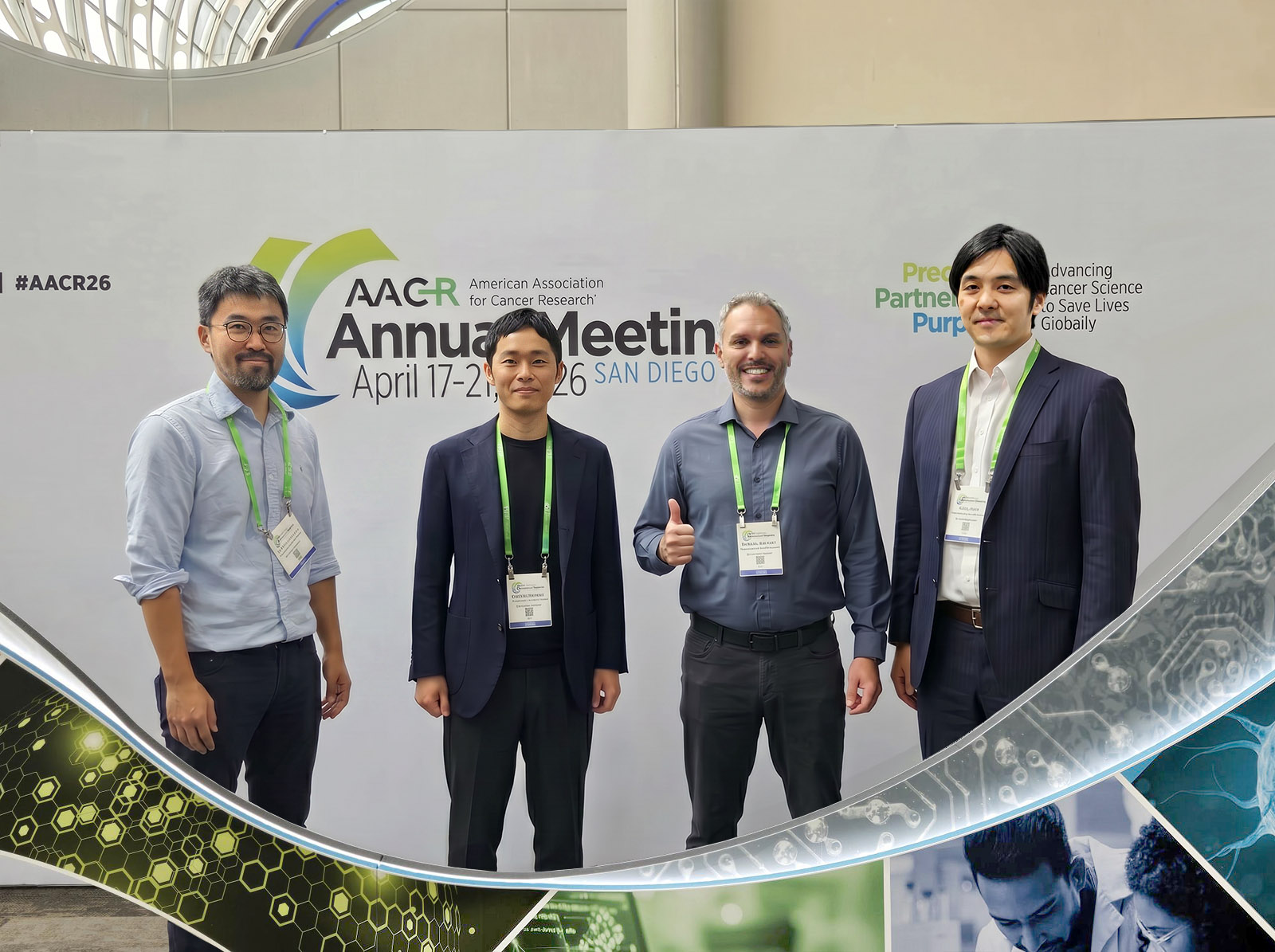
Scientists and research fellows from Providence Saint John’s Cancer Institute (SJCI) recently presented their work at the American Association for Cancer Research (AACR) Annual Meeting, held April 17–22, 2026, in San Diego, CA.
The AACR Annual Meeting is widely recognized as the world’s largest gathering dedicated to advancing cancer research, bringing together investigators, clinicians, and trainees to share discoveries spanning basic science to clinical translation. SJCI’s strong presence this year underscores the Institute’s deep commitment to contributing meaningful, patient-centered research on a global stage.
Researchers from SJCI delivered several poster presentations highlighting five focused studies: two in urology, one in colorectal cancer, another in cholangiocarcinoma, and the last in metastatic melanoma, reflecting the breadth and rigor of ongoing translational efforts at the Institute. In attendance were the head of the Department of Translational & Precision Medicine, Matias Bustos, Ph.D., Assistant Professor, along with SJCI’s translational molecular medicine fellows, Dr. Kodai Abe, Dr. Kazuaki Okamoto, and former fellows Dr. Yusuke Nakano and Dr. Dai Takamatsu.
Dr. Bustos presented a study analyzing the urine samples from patients with prostate cancer, and together with Dai Takamatsu, MD, Ph.D., former Postdoctoral Research Fellow of Translational Molecular Medicine, highlighted a novel study trying to diagnose patients with Prostate cancer using single-cell sequencing on tissue biopsies. Collectively, these studies were made possible through a combination of competitive grants and dedicated philanthropic support to the Urology Department.
Kazuaki Okamoto, MD, Ph.D., Postdoctoral Research Fellow of Translational Molecular Medicine, presented work conducted in collaboration with Anton Bilchik, MD, Ph.D., MBA, FACS Chief of General Surgery and Director of the Gastrointestinal and Hepatobiliary Program, as well as Dr. Bustos. These projects also involved national and community-based partners, including Stand Up to Cancer (SU2C), the Center on Rural Innovation (CORI), and the Hearst Foundations.
Additional research was presented by Kodai Abe, MD, Ph.D., with support from organizations such as AMRF and CORI. Dr. Abe’s study aims to identify potential markers associated with aggressive features in patients with intrahepatic cholangiocarcinoma and assess their clinical utility for monitoring treatment response.
Finally, a study in metastatic melanoma by Yusuke Nakano, MD, Ph.D., a former Postdoctoral Research Fellow of Translational Molecular Medicine, was selected for an oral presentation at AACR. This study also involved Dr. Bilchik in collaboration with Keio University and was part of SJCI’s longstanding collaboration and support for AMRF. The study was published in the journal Cell Death and Disease in December 2025.
SJCI Fellows are Hands-on
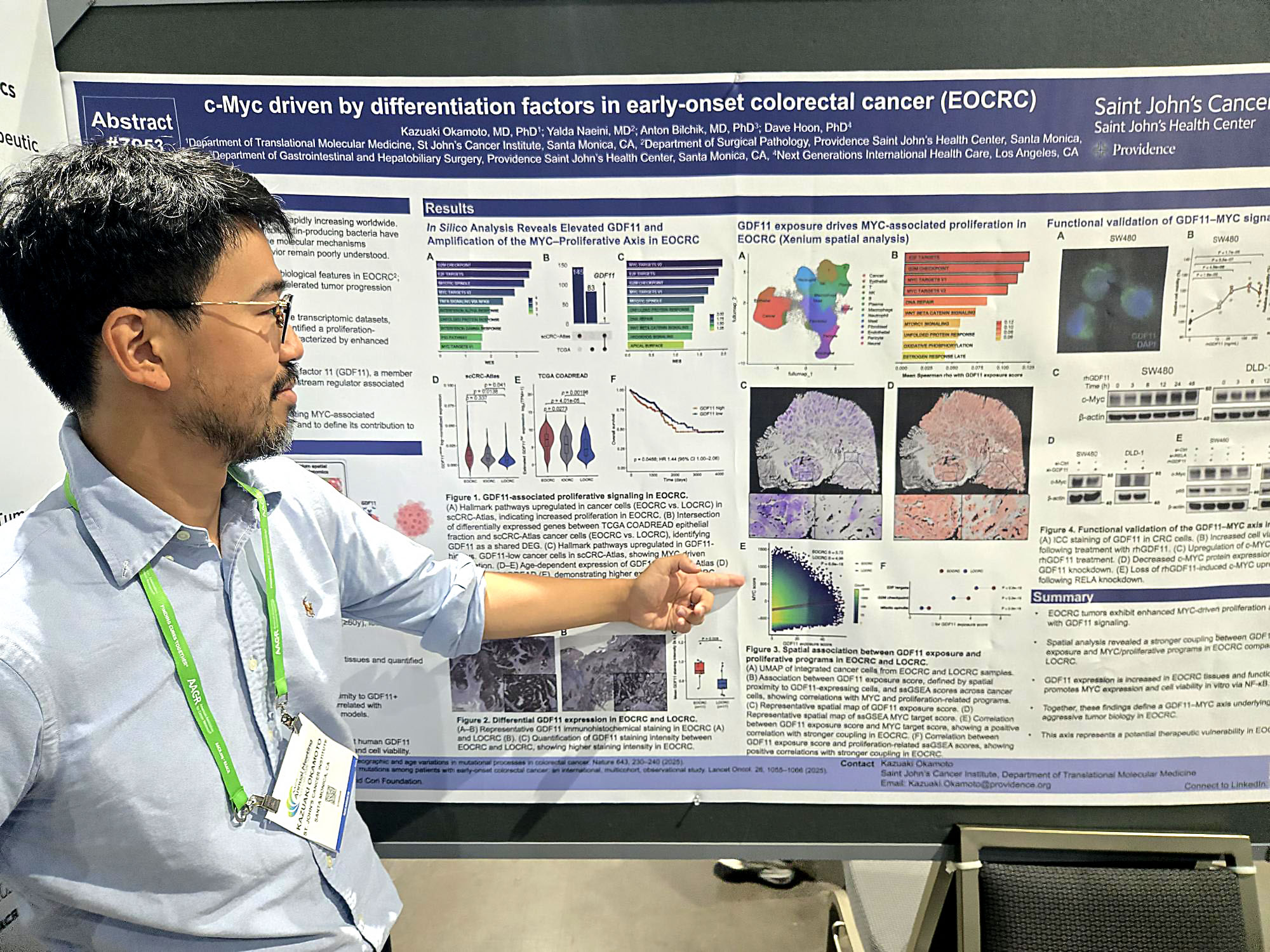
This year’s participation also reflects SJCI’s longstanding engagement with AACR and the broader cancer research community. Dr. Bustos received an AACR award in 2024, highlighting the caliber of leadership guiding the Institute’s translational and precision medicine programs. As research continues within SJCI’s Translational Molecular Medicine and Translational Precision Medicine Departments, the goal remains clear: to advance molecular oncology discoveries from the bench to the bedside for the benefit of patients at SJCI—and patients around the world.
Learn more about Translational Research Departments.
About
The Translational Research Departments at Providence Saint John’s Cancer Institute bridge laboratory discovery and clinical application, moving promising scientific findings directly toward patient care. Multidisciplinary teams focus on molecular medicine, precision oncology, and biomarker-driven research to improve diagnosis, prognosis, and treatment strategies. Hands-on investigation is central to the program, providing fellows and investigators with direct experience in advanced technologies and clinically relevant research. The department’s work supports SJCI’s mission to deliver personalized, evidence-based cancer care. Learn more at https://www.saintjohnscancer.org/translational-research-departments/.
Center for Gastrointestinal and Hepatobiliary Tumors at SJCI
The Center for Gastrointestinal and Hepatobiliary Tumors at SJCI delivers comprehensive, multidisciplinary care for cancers of the digestive system and liver. Surgeons, medical oncologists, researchers, and support specialists collaborate closely to integrate advanced surgical techniques with innovative translational research. The Center emphasizes innovation in treatment strategies, including molecular profiling and clinical trials. This approach ensures patients benefit from the latest research-informed advances in gastrointestinal cancer care. Learn more at https://www.saintjohnscancer.org/gastrointestinal/.
Urology Center of Excellence at SJCI
SJCI’s Urology Center of Excellence is dedicated to advancing the diagnosis and treatment of urologic cancers through specialized clinical care and robust research efforts. The Center integrates molecular and translational research to better understand disease mechanisms and identify targeted therapies. Strong philanthropic and grant support enables investigators and fellows to pursue innovative, patient-focused studies. This commitment positions the Center as a leader in precision urologic oncology. Learn more at https://www.saintjohnscancer.org/urology/.
American Association for Cancer Research (AACR)
The American Association for Cancer Research (AACR) is the world’s oldest and largest professional organization dedicated to advancing cancer research. Its annual meeting serves as a premier global forum for sharing new discoveries spanning basic science, translational research, and clinical application. AACR also supports researchers through education, collaboration, and prestigious awards that recognize scientific excellence. The organization plays a critical role in accelerating progress against cancer worldwide. Learn more at https://www.aacr.org/.
Adelson Medical Research Foundation (AMRF)
The American Medical Research Foundation (AMRF) supports innovative biomedical and clinical research aimed at improving patient care and advancing scientific discovery. Through targeted funding and philanthropic partnerships, AMRF helps investigators pursue exploratory and translational studies that may not yet qualify for larger federal grants. Its support is valuable in enabling early-stage research and investigator training. AMRF’s contributions play a meaningful role in accelerating progress across multiple areas of medical research, including oncology. Learn more at https://www.adelsonfoundation.org/.
Center on Rural Innovation (CORI)
The Center on Rural Innovation (CORI) is a national nonprofit organization focused on advancing economic development and innovation in rural communities. Through research, data-driven strategies, and partnerships, CORI works to expand access to technology, capital, and opportunity. Its collaborations with research institutions help address health and equity gaps in underserved populations. CORI’s involvement in biomedical research underscores the importance of inclusive innovation. Learn more at https://ruralinnovation.us/.
The Hearst Foundations
The Hearst Foundations are philanthropic organizations that support outstanding programs in health, education, culture, and social services. In health and biomedical research, the Foundations invest in initiatives that promote innovation, scientific advancement, and improved patient outcomes. Their support enables institutions to pursue high-impact research and training programs. Through strategic philanthropy, the Hearst Foundations help accelerate progress in medical discovery. Learn more at https://www.hearstfdn.org/.
Stand Up To Cancer (SU2C)
Stand Up To Cancer (SU2C) is a global charity dedicated to accelerating cancer research through innovative, collaborative science. SU2C funds team-based research projects that unite experts across institutions and disciplines to move discoveries rapidly into the clinic. Its focus on translational research helps shorten the time between laboratory breakthroughs and patient benefits. SU2C’s model has transformed how collaborative cancer research is conducted worldwide. Learn more at https://standuptocancer.org/.
#cancerresearch #saintjohnscancerinstitute