

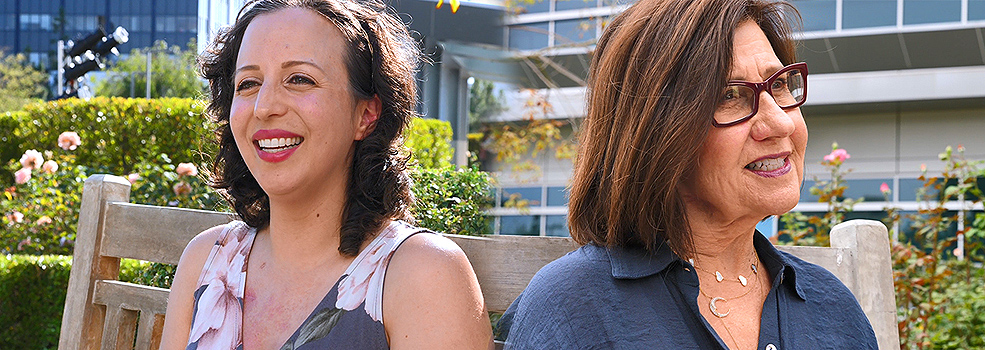
Two Breast Cancer Survivors, Two Different Treatment Journeys
Michaela and Patricia were both diagnosed with early-stage breast cancer, but their treatment experiences were very different. Michaela underwent a bilateral mastectomy followed by chemotherapy, while Patricia chose breast-conserving surgery with intraoperative radiation therapy (IORT) and endocrine treatment. Their stories demonstrate why two people with the same breast cancer stage may receive different recommendations based on the characteristics of their cancer and their individual needs.
Filmed in the rose garden at Providence Saint John’s Health Center in Santa Monica, California, the two survivor testimonials introduce different approaches to breast cancer care at the Margie Petersen Breast Center.
Parvin Peddi, MD, breast medical oncologist, and Crystal Fancher, MD, breast surgical oncologist, provide clinical perspectives on the decisions involved in each patient’s treatment.
Although the original interviews were shared in 2021, their central message remains relevant: breast cancer treatment is not determined by stage alone. Tumor biology, hormone receptor and HER2 status, lymph node findings, surgical considerations, and personal preferences can all influence which treatments are recommended.
Why Mastectomy or Breast-Conserving Surgery?
Breast cancer surgery may involve removing the cancer while preserving much of the breast or removing the entire breast through mastectomy. Both approaches can be medically appropriate depending on the diagnosis and individual circumstances.
Breast-conserving surgery, also called lumpectomy or partial mastectomy, removes the tumor and an appropriate margin of surrounding tissue. Mastectomy removes the breast tissue and may involve one breast or both breasts, depending on the medical circumstances and the patient’s decisions.
For appropriately selected patients, breast-conserving surgery followed by recommended radiation therapy provides long-term survival outcomes comparable to mastectomy. However, breast conservation is not suitable for every diagnosis, and patients may have personal reasons for choosing among medically appropriate options.
How Lymph Node Evaluation Influences Breast Surgery
Breast cancer surgery may also involve evaluating lymph nodes in the underarm, called axillary lymph nodes. These nodes can provide information about whether cancer has spread beyond the breast.
Sentinel lymph node biopsy removes a small number of nodes most likely to receive drainage from the tumor. More extensive axillary surgery may be necessary in selected circumstances, but it is no longer routinely required for every patient with breast cancer.
For certain carefully selected patients with small, clinically node-negative tumors, contemporary guidelines allow omission of sentinel lymph node surgery when the findings would not change treatment. These decisions depend on age, tumor characteristics, clinical circumstances, and other aspects of the treatment plan.
Learn more about Surgical Treatments for Breast Cancer, including lumpectomy, mastectomy, oncoplastic techniques, and lymph node evaluation.
Why Radiation May Be Recommended After Surgery
Radiation therapy is generally recommended after breast-conserving surgery to lower the risk of cancer returning in the treated breast, although selected patients may be eligible for omission based on their diagnosis and treatment plan.
Radiation may also be recommended after mastectomy, particularly when the cancer involves lymph nodes or other findings indicate a higher risk of local or regional recurrence. Removing the breast does not automatically eliminate the need for radiation.
The radiation treatment area, technique, and duration are individualized. Patients should discuss the expected benefits and limitations with their radiation oncologist before making treatment decisions.
Michaela’s Story: Stage I HER2-Positive Breast Cancer
Michaela was diagnosed with stage I breast cancer and underwent a double, or bilateral, mastectomy followed by chemotherapy. Her tumor was HER2-positive, a characteristic that influenced the medical treatment recommended after surgery.
HER2 is a protein involved in regulating cell growth. Breast cancers that produce unusually high levels of HER2 may grow and divide more rapidly. However, advances in targeted treatment have substantially improved the options available for patients with HER2-positive disease.
Parvin Peddi, MD, Director of Breast Medical Oncology at the time of the interview, explained why patients with the same stage of cancer may receive different treatments.
“Not all breast cancers are the same and we treat different types of breast cancer differently through personalized treatments,”
– Parvin Peddi, MD
Dr. Peddi offered HER2-positive breast cancer as an example of how tumor biology can influence treatment recommendations:
“HER2 positive breast cancer represents 20% of breast cancers, are more aggressive in nature, and have a greater potential to spread to other parts of the body. Those patients typically need chemotherapy, such as with Michaela’s case. While a patient with the same stage of cancer who is HER2 negative may not need chemotherapy. Nevertheless, patients who are HER2 positive and who receive chemotherapy do very well and have a great cure rate,”
– Parvin Peddi, MD
Dr. Peddi’s comments reflect the treatment context at the time of the interview. Today, HER2-positive breast cancer is frequently treated with HER2-targeted medications, often in combination with chemotherapy. Whether these treatments are needed depends on tumor size, lymph node findings, hormone receptor status, other clinical factors, and the expected benefits of treatment.
Why Chemotherapy May Be Recommended for Early-Stage Breast Cancer
Chemotherapy uses medications that interfere with the growth and division of cancer cells. It can be recommended even when a breast cancer has not spread to distant organs, because microscopic cancer cells may remain after surgery or may be present elsewhere in the body without being detectable by imaging.
Depending on the diagnosis, chemotherapy may be used:
- After surgery (adjuvant chemotherapy): To reduce the risk that remaining microscopic cancer cells will lead to recurrence.
- Before surgery (neoadjuvant chemotherapy): To treat cancer before an operation, potentially shrink the tumor, and provide information about treatment response.
- For metastatic breast cancer: To help control cancer that has spread to distant parts of the body, reduce symptoms, and prolong survival when appropriate.
The choice of chemotherapy and its timing depend on the cancer subtype, extent of disease, and treatment goals. Chemotherapy for stage I disease does not mean that the cancer has already metastasized.
How HER2-Targeted Therapy Has Changed Treatment
HER2-positive breast cancer accounts for approximately 15% to 20% of breast cancers, although estimates vary among populations and methods of classification.
Medications that target HER2, including trastuzumab and other HER2-directed therapies, have improved outcomes for many patients. These medications interfere with the biological signals that help HER2-positive cancer cells grow and may be used alongside chemotherapy or other treatments.
For appropriately selected patients with small, node-negative HER2-positive tumors, treatment may involve a less intensive chemotherapy regimen combined with HER2-directed therapy. Other patients require a different combination or sequence of treatments.
Not every small HER2-positive tumor requires the same regimen. Decisions depend on the expected benefits, potential risks, and individual circumstances.
Michaela’s original testimonial does not establish the complete medication regimen she received, so her treatment should not be described as including a particular HER2-targeted drug unless confirmed through her clinical record or interview.
Learn more about chemotherapy, HER2-directed treatments, and other systemic options on our Medical Treatments for Breast Cancer page.
Watch Michaela Share Her Breast Cancer Experience
In the first patient interview, Michaela discusses her experience with breast cancer treatment and recovery following bilateral mastectomy and chemotherapy. Dr. Peddi provides additional context about the treatment considerations involved in her diagnosis.
Michaela — Breast Cancer Survivor Testimonial
Patricia’s Story: Breast-Conserving Surgery and IORT
Patricia, also called Patty in her interview, was diagnosed with hormone receptor-positive breast cancer following a screening mammogram. The original article described her diagnosis as stage I, with a small tumor and no apparent lymph node involvement at the time of treatment planning.
Unlike Michaela, Patricia chose breast-conserving surgery rather than mastectomy. Her treatment included a lumpectomy and Intraoperative Radiation Therapy (IORT), followed by endocrine therapy instead of chemotherapy.
Crystal Fancher, MD, breast surgical oncologist at the Margie Petersen Breast Center, explained the clinical considerations behind Patricia’s treatment:
“Her breast cancer was very small and did not appear to have spread to the lymph nodes, which was verified with imaging and a clinical exam. She was offered Intraoperative Radiation Therapy (IORT) due to the small size of the tumor and because of negative findings in the lymph nodes. Patricia did not need chemotherapy and was able to start endocrine therapy,”
– Crystal Fancher, MD
Patricia’s treatment reflected the findings and clinical recommendations available when she received care. The small size of her tumor and its hormone receptor status were among the factors considered when developing her plan.
Dr. Fancher also described the selection criteria used for IORT at that time:
“IORT is offered based on several criteria. In general, patients need to be undergoing breast conservation surgery, be over the age of 40, have small sized tumors, and have negative lymph nodes,”
– Crystal Fancher, MD
Dr. Fancher further explained: “IORT is a form of partial breast radiation that is delivered as a one-time dose at the time of surgery.”
These statements document the approach used during Patricia’s treatment. Current recommendations concerning IORT have changed, and patients considering radiation today should review the updated evidence with their treating physicians.
What Is Intraoperative Radiation Therapy?
IORT delivers radiation directly to the surgical cavity during breast-conserving surgery, after the tumor has been removed and before the operation is completed.
The technique concentrates treatment around the area where cancer was removed and may reduce the number of separate radiation appointments. However, the convenience of a single intraoperative treatment must be weighed against long-term cancer-control outcomes.
IORT differs from other partial-breast radiation methods, including external-beam partial-breast radiation and brachytherapy, which have different evidence supporting their use.
Learn how the procedure works and how it differs from other approaches on our Intraoperative Radiation Therapy for Breast Cancer page.
What Current Guidelines Say About IORT
Since Patricia’s treatment, professional guidance concerning partial-breast irradiation has been updated.
The American Society for Radiation Oncology (ASTRO) published its updated partial-breast irradiation guideline in 2024. Based on the available evidence, the guideline does not recommend electron IORT or photon IORT alone, without whole-breast radiation, outside a clinical trial or multi-institutional registry. This recommendation reflects concerns about higher local recurrence rates with these approaches compared with established radiation techniques.
The guidance does not discourage all partial-breast radiation. For appropriately selected patients, established partial-breast radiation methods, including certain external-beam techniques and brachytherapy, remain recommended alternatives to whole-breast radiation.
The age thresholds and tumor characteristics described in older IORT protocols should not be treated as universal eligibility requirements today.
Patricia’s original treatment experience remains part of her personal history. Patients making decisions now should discuss current recommendations, the strength of available evidence, possible side effects, recurrence risk, and the possibility of additional radiation after surgery.
Explore Radiation Therapy Methods for Breast Cancer for more information about whole-breast and partial-breast treatment options.
Why Patricia Received Endocrine Therapy Instead of Chemotherapy
Hormone receptor-positive breast cancers contain cells that respond to estrogen, progesterone, or both. Endocrine therapy reduces the effects of these hormones on cancer cells and can lower the likelihood of recurrence after treatment.
Common approaches include tamoxifen and aromatase inhibitors, with the choice depending on menopausal status, cancer characteristics, recurrence risk, and other factors.
For some patients with early-stage hormone receptor-positive breast cancer, endocrine therapy may provide substantial benefit without the need for chemotherapy. Other patients may benefit from chemotherapy as well, depending on tumor biology, lymph node findings, and additional clinical information.
Hormone receptor-positive status alone does not establish that chemotherapy can safely be omitted. The recommendation must be based on a complete assessment.
Patricia’s treatment plan was selected for her particular diagnosis and should not be interpreted as a recommendation for every patient with stage I breast cancer.
Watch Patricia Share Her Breast Cancer Treatment Experience
In the second interview, Patricia discusses her experience with breast-conserving surgery and the care she received from Dr. Crystal Fancher at the Margie Petersen Breast Center.
Her story illustrates how patients with early-stage breast cancer may have different surgical and post-surgical treatment options depending on the clinical findings and their preferences.
Patricia — Breast-Conserving Surgery and IORT Testimonial
Two Stage I Breast Cancers: Why Were Their Treatments Different?
Michaela and Patricia illustrate an important distinction in breast cancer care: two patients may have the same overall stage of disease but different tumor biology, treatment priorities, and recommended therapies.
Michaela’s HER2-positive diagnosis influenced the recommendation for chemotherapy following bilateral mastectomy. Patricia’s hormone receptor-positive diagnosis and other favorable clinical features supported a different approach involving breast conservation, localized radiation, and endocrine therapy.
Neither experience establishes that one treatment approach is universally better. The objective is to select treatment that appropriately addresses the cancer while considering potential side effects and individual preferences.
The Importance of Breast Cancer Biomarkers
Breast cancer biomarkers help physicians understand tumor characteristics and identify treatments that may be effective.
Important findings include:
- Estrogen receptor (ER) and progesterone receptor (PR) status: Help determine whether endocrine therapy is likely to be beneficial.
- HER2 status: Helps identify cancers that may respond to HER2-targeted therapies.
- Tumor grade: Describes how abnormal the cancer cells appear under a microscope and provides information about their likely behavior.
- Lymph node findings: Help establish disease extent and may influence systemic treatment and radiation recommendations.
- Genomic testing: May provide additional recurrence-risk information and help guide chemotherapy decisions for selected breast cancer subtypes.
Not every test is necessary or appropriate for every diagnosis. Medical oncologists use the information relevant to the individual tumor to develop treatment recommendations.
Why Patient Preferences Also Matter
When more than one medically appropriate surgical approach is available, patients may consider recovery, breast appearance, reconstruction, radiation requirements, genetic risk, and personal priorities.
Some patients prefer breast conservation, while others choose mastectomy after understanding the expected benefits, limitations, and consequences. The choice should follow a discussion of the available evidence rather than an assumption that removing more tissue always improves survival.
A multidisciplinary care team can help patients understand how surgery, radiation, medical treatment, and supportive care fit together.
Learn more about Breast Cancer Treatment Options and how personalized treatment plans are developed.
What Are the Chances of Surviving Breast Cancer?
Breast cancer survival depends on several factors, including disease extent, tumor biology, age, overall health, treatment response, and other individual circumstances.
Population-level survival statistics can help explain general patterns, but they cannot determine what will happen to one particular patient.
How Breast Cancer Survival Rates Are Reported
The National Cancer Institute’s Surveillance, Epidemiology, and End Results (SEER) program reports breast cancer survival using categories such as localized, regional, and distant disease. These categories are not identical to the individual numerical stages used in clinical cancer staging.
Recent SEER data show five-year relative survival approaching 100% for breast cancers diagnosed while localized to the breast. Outcomes are generally less favorable when disease has spread to nearby structures, lymph nodes, or distant organs.
These figures represent groups of patients diagnosed in earlier years. They do not predict an individual’s outcome and may not fully reflect the benefits of newer therapies.
Even within the same extent-of-disease category, hormone receptor status, HER2 status, tumor grade, and other characteristics can affect prognosis.
For current population statistics, see the National Cancer Institute’s Breast Cancer Survival and Prognosis resource.
Early Detection and Follow-Up
Both Michaela and Patricia had routine checkups and were diagnosed with breast cancer at an early stage. Their experiences reinforce the importance of appropriate screening and the evaluation of concerning breast changes.
Mammography can identify many cancers before symptoms develop, while diagnostic evaluation helps investigate new lumps, nipple changes, and other findings.
Not every breast cancer can be prevented or detected before it progresses, and screening does not guarantee a particular treatment outcome. Nevertheless, identifying cancer when it remains localized generally provides more treatment options and is associated with more favorable survival outcomes.
Patients should discuss screening frequency and individual risk factors with their healthcare professionals. Learn more through our Breast Evaluation and Breast Imaging resources.
Personalized Treatment for Breast Cancer: Additional Expert Education
For a more detailed discussion of breast cancer subtypes and individualized medical treatment, Parvin Peddi, MD, presented an educational webinar titled Personalized Treatment for Breast Cancer, supported by Cancer Support Community Los Angeles.
The webinar provides additional context for how physicians evaluate tumor characteristics and determine which treatments may be appropriate.
Patients can explore educational programs through Cancer Support Community Los Angeles and review the Margie Petersen Breast Center for information about breast cancer services.
Understanding Breast Cancer Treatment at Saint John’s
Michaela and Patricia’s stories demonstrate why personalized breast cancer care matters. Although both were described as having stage I disease, their tumor characteristics and treatment plans differed. Through conversations with their physicians, each pursued a treatment approach selected for her individual diagnosis, illustrating the importance of understanding breast cancer biology, surgical choices, medical treatment, and radiation options.
Patients can learn more about the Margie Petersen Breast Center, compare Breast Cancer Surgical Treatments, and explore Medical Treatments and Radiation Therapy. Patients with a new diagnosis or questions about treatment options can contact the Breast Center to discuss appropriate next steps.
This article was originally written in collaboration with Crystal Fancher, MD, breast surgical oncologist, and Parvin Peddi, MD, breast medical oncologist, at Saint John’s Cancer Institute.
Sources & Further Reading
- National Cancer Institute — Breast Cancer Treatment, Including HER2-Positive Disease
- National Cancer Institute — Targeted Therapy for Breast Cancer
- National Cancer Institute — Hormone Therapy for Breast Cancer
- National Cancer Institute — Breast Cancer Survival and Prognosis
- American Society for Radiation Oncology — Partial-Breast Irradiation Clinical Practice Guideline (2024)
- Saint John’s Cancer Institute — Margie Petersen Breast Center
- Saint John’s Cancer Institute — Surgical Treatments for Breast Cancer
- Saint John’s Cancer Institute — Medical Treatments for Breast Cancer
- Saint John’s Cancer Institute — Radiation Therapy Methods for Breast Cancer
- Saint John’s Cancer Institute — Intraoperative Radiation Therapy for Breast Cancer