

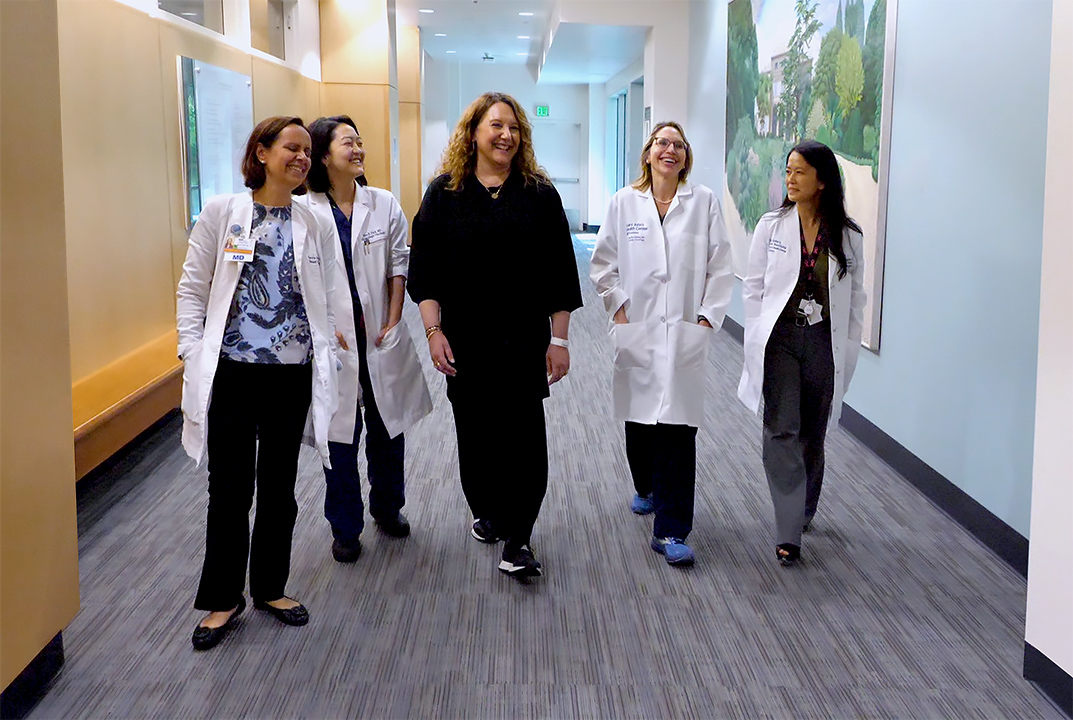
When Valerie Carmona learned she had breast cancer in 2023, she could not have anticipated that her diagnostic journey would reveal three separate primary cancers. Two distinct cancers were identified in her breast, while additional imaging uncovered a kidney tumor and a suspicious ovarian mass. Determining whether these findings represented metastatic disease or unrelated conditions required collaboration among multiple medical and surgical specialists.
Valerie, then 53, was a mother of two boys and a dedicated professional. She navigated a complex period of treatment and recovery with a personal approach that emphasized privacy, determination, and continuing with her everyday responsibilities whenever possible.
Her experience at Providence Saint John’s Health Center and Saint John’s Cancer Institute illustrates the importance of accurate diagnosis, coordinated treatment planning, and attention to emotional well-being when a patient faces more than one cancer.
Valerie Carmona’s Journey With Three Synchronous Primary Cancers
Synchronous primary cancers are two or more distinct cancers diagnosed in the same person within a relatively short period. The term is often used when diagnoses occur within approximately six months of one another, although definitions vary among studies and cancer registries.
Unlike metastatic cancer, which develops when cells spread from an original cancer to another location, multiple primary cancers arise independently. Distinguishing these possibilities can substantially change staging, treatment recommendations, and prognosis.
Valerie described two breast tumors with different characteristics:
“I was diagnosed with stage two, triple-positive breast cancer in one mass and in my lymph node and then stage one HER2-negative breast cancer that was also fueled by hormones—progesterone and estrogen.”
– Valerie Carmona
Triple-positive breast cancer refers to cancer that is estrogen receptor-positive, progesterone receptor-positive, and HER2-positive. Her second breast cancer was hormone receptor-positive but HER2-negative. These tumor characteristics influenced the treatments considered by her physicians.
Different receptor profiles can help characterize tumors and guide treatment, but receptor differences alone do not establish that two lesions are independent primary cancers. That distinction requires evaluation of the tumors’ pathology, locations, and other clinical findings.
Valerie’s subsequent physician case study confirmed that her team identified two separate breast cancers, making her diagnosis more complex than a single breast tumor.
While navigating treatment, Valerie preferred to keep much of her experience private, even from family. As she explained, “I keep everything under wraps, and it was the only way that I knew how to push through and survive and stay in my own bubble.”
The care and sincerity of her physicians and hospital staff provided reassurance as she managed the different demands of treatment and her daily responsibilities.
Watch Valerie Share Her Experience With Multiple Primary Cancers
In her personal testimonial, Valerie discusses how a breast cancer diagnosis led to additional findings, the uncertainty surrounding her kidney and ovarian masses, and the physicians who helped her understand and manage her care.
She also speaks about a part of the cancer experience that can be difficult to recognize while treatment is underway: the emotional adjustment that follows months of testing, procedures, and uncertainty.
Valerie Carmona — Three Primary Cancers and a Multidisciplinary Care Team
Valerie speaks with Saint John’s Cancer Institute about her experience with multiple primary cancers and the care provided by Janie Grumley, MD; Jennifer Linehan, MD; Hyo K. Park, MD; Parvin Peddi, MD; and Shanthi Gowrinathan, MD.
Understanding Breast Screening and the Diagnostic Journey
Breast imaging played an important role in identifying Valerie’s cancers, but her experience also illustrates the distinction between screening, evaluating a new symptom, and determining the characteristics of a cancer after it has been found.
Valerie initially underwent breast imaging at another hospital. She recalled facing a wait of approximately six weeks for an additional appointment to clarify her diagnosis. Concerned about the delay, she accepted a friend’s recommendation to seek evaluation at the Margie Petersen Breast Center.
That decision helped connect her with specialists who could coordinate additional diagnostic testing and treatment planning.
What Mammography Can and Cannot Tell Us
Mammography is an important screening tool because it can identify abnormalities before breast cancer causes noticeable symptoms. Diagnostic mammography may also help investigate a lump or other concerning finding.
However, mammography does not prevent breast cancer, detect every cancer, or establish the full biological characteristics of a tumor. Additional imaging and a biopsy may be needed to determine whether an abnormality is malignant.
Pathology testing can then identify important features such as estrogen receptor, progesterone receptor, and HER2 status. These findings help guide treatment decisions and cannot be determined from a mammogram alone.
For women at average risk, the U.S. Preventive Services Task Force recommends screening mammography every two years from ages 40 through 74. Other professional organizations recommend different screening intervals, including annual screening beginning at age 40.
Patients with a new breast lump, an underarm mass, nipple changes, or another persistent concern should seek diagnostic evaluation rather than wait for their next routine screening appointment.
Learn more about Breast Evaluation and the differences between routine screening and diagnostic assessment.
Coordinating Care at the Margie Petersen Breast Center

The Margie Petersen Breast Center provides evaluation and coordinated care for breast health concerns, including suspicious imaging findings, breast lumps, and diagnosed cancers.
When an abnormality requires further investigation, the team may recommend targeted ultrasound, diagnostic mammography, biopsy, or other testing according to the clinical findings.
If breast cancer is confirmed, treatment planning may involve breast surgical oncology, medical oncology, radiation oncology, pathology, imaging specialists, and additional services as needed.
Valerie’s complex situation required collaboration extending beyond breast oncology. When the evaluation revealed additional masses, physicians from urologic and gynecologic oncology became involved in determining what those findings represented.
Although some patients can be evaluated quickly, biopsy turnaround times, consultation schedules, and treatment dates vary according to the complexity of the findings and individual circumstances.
Three Synchronous Cancers: Two in the Breast and One in the Kidney
As Valerie’s diagnostic evaluation progressed, imaging identified two additional masses outside the breast: one in her kidney and another involving an ovary.
These findings raised an important question. Had one of the breast cancers spread to distant organs, or were the new abnormalities unrelated?
Because Valerie had a HER2-positive breast cancer involving a lymph node, her physicians needed to investigate the possibility of metastatic disease. However, the location of an abnormal mass alone cannot determine its origin.
The subsequent evaluation established that Valerie had two independent breast cancers and a separate primary kidney cancer. The ovarian mass was benign.
How Valerie’s Two Breast Cancers Differed
According to the team’s subsequent physician case study, one breast tumor was HER2-positive and had involved an underarm lymph node. Another tumor in the same breast was hormone receptor-positive and HER2-negative.
Because HER2-positive breast cancers can respond to medications that target the HER2 protein, Valerie received systemic treatment that included chemotherapy and HER2-directed therapy before breast surgery.
Treating cancer before surgery, known as neoadjuvant therapy, can reduce tumor burden and help physicians evaluate how well a cancer responds to treatment.
The physician case study reported that the HER2-positive cancer had no residual detectable tumor in the breast or involved lymph node at surgery. This is known as a pathologic complete response in the evaluated sites and is an encouraging treatment finding, although ongoing follow-up remains important.
The separate hormone receptor-positive, HER2-negative breast cancer was removed surgically. These different responses illustrate why identifying each tumor’s characteristics matters for treatment planning.
Learn more about Medical Treatments for Breast Cancer and how HER2 status and hormone receptors influence therapy.
Discovering an Independent Kidney Cancer
The kidney mass presented another diagnostic challenge. A lesion found in the kidney of someone already receiving cancer treatment may represent a new kidney cancer, metastatic disease, or a benign condition.
Valerie’s physicians evaluated the findings rather than assuming that the mass had spread from the breast.
According to the subsequent clinical case study, urologic oncologist Jennifer Linehan, MD, performed a robotic partial nephrectomy after Valerie’s breast treatment had progressed sufficiently for surgery.
A partial nephrectomy removes a kidney tumor while preserving as much healthy kidney tissue as is appropriate. This approach may be used for selected localized kidney tumors when cancer control and kidney preservation can both be achieved.
Pathology confirmed that Valerie’s kidney tumor was a separate primary cancer, not a metastasis from either breast cancer.
This distinction was important because a localized kidney cancer and breast cancer that has metastasized to the kidney require different staging, treatment planning, and follow-up.
Valerie described the relief she felt when she learned more about the finding:
“And I remember getting off the phone—and then thanking God—because if not for breast cancer, they never would have found kidney cancer until it was too late.”
– Valerie Carmona
Her words reflect how meaningful the unexpected discovery was to her. Clinically, it is not possible to determine from this account when the kidney cancer would otherwise have been discovered or how it would have progressed.
Patients can learn more about Kidney Cancer, including imaging, diagnosis, partial nephrectomy, and other treatment options through the Urologic Oncology Center of Excellence.
Clarifying the Ovarian Mass
The ovarian mass created additional uncertainty because Valerie’s physicians needed to determine whether it represented a separate cancer, metastatic disease, or a benign gynecologic condition.
Gynecologic oncologist Hyo K. Park, MD, evaluated the finding and performed minimally invasive surgery to remove the mass.
According to the physician case study, pathology identified a benign fibrothecoma, a tumor arising from ovarian stromal tissue. Although the imaging finding required careful evaluation, it was not an additional malignancy.
Valerie’s earlier testimonial described the removal of her ovaries in terms of prevention. The subsequently published physician discussion offers the more specific clinical explanation that surgery was performed to clarify the existing ovarian abnormality.
Clinical clarification: A diagnosis of HER2-positive or hormone receptor-positive breast cancer does not, by itself, require preventive removal of the ovaries. Ovarian surgery may be recommended for other reasons, including a suspicious mass, selected inherited cancer risks, or particular treatment considerations.
Inherited variants in genes such as BRCA1 and BRCA2 can influence ovarian cancer risk and risk-reduction recommendations, but these decisions depend on a patient’s individual genetic and clinical history.
Learn more about the evaluation of Gynecologic Conditions and how specialists distinguish benign findings from ovarian and other gynecologic cancers.
Why Multiple Primary Cancers Require Individualized Treatment
When several tumors are discovered in a person already diagnosed with cancer, physicians must carefully determine whether the findings represent independent cancers, metastatic disease, or benign conditions.
Imaging helps identify and characterize abnormalities, while biopsy or surgical pathology may be needed to establish the diagnosis. In some situations, additional molecular testing contributes useful information.
Once the diagnoses are clarified, physicians determine which condition requires the most urgent treatment and how procedures and systemic therapies can be sequenced safely.
Valerie’s case required coordination among breast surgery, medical oncology, urologic surgery, gynecologic oncology, and supportive care. The sequence was developed around her particular diagnoses, treatment response, and readiness for additional procedures.
Valerie’s Message: Feeling Supported Through a Complex Cancer Journey
Valerie’s experience involved more than the discovery and treatment of three cancers. It also required managing uncertainty, repeated appointments, surgery, and the emotional effects of living with several serious diagnoses at once.
She credited the communication and personal attention she received from her physicians and hospital staff with helping her navigate the experience.

Among the aspects of care Valerie appreciated were:
- Having opportunities to raise concerns and receive answers about her diagnosis and treatment.
- Beginning treatment without the extended delays she had initially feared.
- Feeling comfortable in the clinical environment.
- Developing a meaningful connection with her oncologist.
- Receiving support from the physicians, nurses, and other hospital professionals involved in her care.
Valerie’s last treatment during the period described in her original testimonial was in October 2024. Although the completion of intensive treatment marked an important milestone, her experience did not simply end when the procedures and appointments became less frequent.
As she began moving beyond active treatment, Valerie discovered that emotional recovery required attention of its own.
“There’s a part of cancer that, like, people don’t really talk about. So—you can’t go back to the life you had prior to cancer. You can’t, because you’re a different person. And you can’t stay in a state of survival mode—fighting, battling, surgery, scans—that’s over, to a certain extent.”
– Valerie Carmona
How Do You Move Forward After Cancer Treatment?
For someone treated for multiple primary cancers, survivorship may involve several types of ongoing care. Follow-up recommendations depend on each cancer’s stage, pathology, treatment history, recurrence risks, and the patient’s overall health.
Breast cancer follow-up may include medical oncology visits, breast imaging when appropriate, and monitoring for effects of systemic therapy. Kidney cancer follow-up may involve imaging, laboratory tests, and assessment of kidney function following surgery.
Yet physical recovery and medical surveillance are only part of the experience. After months of concentrating on treatment decisions, procedures, and appointments, patients may find themselves processing emotional experiences that received little attention while care was underway.
Valerie described this transition candidly:
“You have to find a new way to kind of navigate, not necessarily having cancer, but still having all the trauma that you didn’t have time to process for the year that you were just trying to get through it. So that’s where I’m at right now.”
The Role of Psycho-Oncology and Survivorship Support
At the time of her interview, Valerie was participating in survivorship and psycho-oncology services at Saint John’s. These services help patients address emotional distress, grief, anxiety, changes in identity, fear of recurrence, and other experiences that can arise during or after cancer treatment.

Valerie spoke with Shanthi Gowrinathan, MD, a psychiatrist specializing in psycho-oncology and the psychological effects of complex medical conditions.
Dr. Gowrinathan works with patients experiencing emotional and psychiatric concerns in the setting of cancer, including distress related to treatment, uncertainty, and changes in daily life.
Support may include psychiatric evaluation, counseling, medication when appropriate, and coordination with other medical and supportive care professionals.
Survivorship does not mean that every patient has the same emotional response. Some people experience relief following treatment, others face persistent anxiety or grief, and many experience a combination of feelings over time.
Seeking help for these concerns is an appropriate part of healthcare, not something that must be postponed until a crisis develops.
Learn more about Cancer Support Services and the emotional, practical, and rehabilitative resources available to patients and families.
Why Coordinated Follow-Up Matters After Multiple Cancers
Patients treated for more than one primary malignancy may have different surveillance schedules and long-term health considerations for each diagnosis.
Coordination among specialists can help clarify which appointments, imaging studies, laboratory tests, and medications are recommended, while avoiding unnecessary duplication when possible.
Depending on personal and family history, some patients with multiple primary cancers may also benefit from hereditary cancer risk assessment or genetic counseling. However, the presence of multiple cancers does not automatically establish an inherited cause.
A personalized survivorship plan should account for all treated malignancies, the possible late effects of therapy, and the patient’s individual priorities.
Meet Valerie’s Multidisciplinary Medical and Surgical Team
Valerie’s care involved specialists across breast oncology, urologic oncology, gynecologic oncology, and psycho-oncology. Each contributed to understanding or managing a different aspect of her diagnosis and recovery.
 |
 |
 |
 |
|
Janie Grumley, MD, FACS, Breast Surgical Oncologist and Director, Margie Petersen Breast Center
|
Parvin Peddi, MD, Medical Oncologist and Director, Breast Medical Oncology
|
Jennifer Linehan, MD, Urologic Oncologist
|
Hyo K. Park, MD, Gynecologic Oncologist
|
Shanthi Gowrinathan, MD, also participated in Valerie’s multidisciplinary care through psycho-oncology and survivorship support. Learn more about Dr. Gowrinathan.
Watch Valerie’s Physicians Discuss Her Rare and Complex Case
Following Valerie’s original testimonial, five physicians involved in her care participated in a separate clinical case discussion. Published in December 2025, the approximately 29-minute video provides additional information about the diagnostic findings, treatment sequence, surgical decisions, and supportive care involved in managing three distinct primary cancers.
The discussion features Drs. Janie Grumley, Parvin Peddi, Jennifer Linehan, Hyo K. Park, and Shanthi Gowrinathan. Together, they explain how the findings in Valerie’s breast, kidney, and ovary required careful collaboration rather than assumptions about metastatic disease.
Case Study: When One Cancer Leads to Three
This companion article is especially useful for readers who want to understand the clinical decisions behind Valerie’s experience, while her original testimonial provides the patient’s perspective on diagnosis, treatment, and emotional recovery.
Coordinated Care for Multiple Primary Cancers at Saint John’s
Valerie Carmona’s experience illustrates why accurate diagnosis and communication among specialists are essential when several tumors are discovered during cancer evaluation. Identifying two separate breast cancers, a third primary cancer in the kidney, and a benign ovarian mass allowed her physicians to develop treatment plans specific to each finding. Equally important, Valerie’s journey continued beyond medical procedures to include the emotional work of adjusting to life after cancer treatment.
Patients can explore the Margie Petersen Breast Center, learn about Kidney Cancer Evaluation and Treatment, review Gynecologic Conditions, and find resources through Cancer Support Services. Patients with more than one suspicious finding can discuss appropriate specialist evaluation and coordinated care with their healthcare team.
Sources & Further Reading
- Saint John’s Cancer Institute — When One Cancer Leads to Three: Physician Case Study (2025)
- Saint John’s Cancer Institute — Margie Petersen Breast Center
- Saint John’s Cancer Institute — Breast Evaluation
- Saint John’s Cancer Institute — Medical Treatments for Breast Cancer
- Saint John’s Cancer Institute — Kidney Cancer: Diagnosis and Treatment
- Saint John’s Cancer Institute — Gynecologic Conditions
- Saint John’s Cancer Institute — Cancer Support Services
- U.S. Preventive Services Task Force — Breast Cancer Screening Recommendations (2024)
- National Cancer Institute — Surgery to Reduce Breast and Ovarian Cancer Risk
- National Cancer Institute SEER Program — Solid Tumor Multiple Primary Rules