


White Button Mushroom Clinical Trial for Prostate Cancer: Research, Results, and Study Status
Can a supplement derived from white button mushrooms influence prostate cancer activity? Researchers have investigated this question through clinical trials involving patients with recurrent prostate cancer and patients with favorable-risk disease managed through active surveillance. In this original November 2021 interview, medical oncologist Przemyslaw Twardowski, MD, discusses the scientific rationale behind a Phase II clinical trial of white button mushroom extract, the results of earlier research, and the importance of evaluating potential therapies through carefully designed clinical studies.
White button mushrooms (Agaricus bisporus) are commonly consumed as food, but the clinical research described here involves specially prepared mushroom-derived supplements administered and monitored under a study protocol. The research does not establish that eating mushrooms or taking commercially available mushroom supplements treats or prevents prostate cancer.
Clinical trial status update — November 2026: The Phase II trial, registered as NCT04519879, is listed as suspended on ClinicalTrials.gov. The registry reports an actual enrollment of 133 participants and an actual primary completion date of March 31, 2026. Published Phase II efficacy results were not available in the registry at the time of this update. This article is retained as a historical research feature and is not an invitation to enroll in that study.
Patients interested in currently available prostate cancer research can explore the Active Clinical Trials at Saint John’s Cancer Institute, including the prostate cancer studies and searchable trial directory.
Why Are Researchers Studying White Button Mushrooms for Prostate Cancer?
White button mushrooms contain naturally occurring compounds that researchers have investigated for possible biological effects involving hormones, inflammation, and immune function. Laboratory findings and preliminary clinical observations raised questions about whether concentrated mushroom-derived preparations might influence prostate cancer biology.
These questions led to clinical research at City of Hope involving Przemyslaw Twardowski, MD, and collaborators. Dr. Twardowski, a medical oncologist specializing in genitourinary cancers, subsequently discussed the Phase II investigation as part of Saint John’s Cancer Institute’s prostate cancer clinical research program.
The purpose of a clinical trial is to determine whether an intervention produces measurable benefits, what adverse effects may occur, and whether the findings justify further investigation. A promising laboratory result or early clinical observation is not sufficient evidence to recommend a supplement as cancer treatment.
What Does PSA Tell Researchers?
Prostate-specific antigen (PSA) is a protein produced by prostate cells. PSA blood testing is used in prostate cancer evaluation and monitoring, although PSA levels can also be affected by benign prostate conditions and other factors.
After prostate cancer treatment, a rising PSA may indicate biochemical recurrence, meaning that laboratory findings suggest possible cancer activity even when imaging does not reveal a visible tumor.
Researchers can measure changes in PSA to investigate whether an experimental treatment has biological activity. However, a PSA decrease alone does not demonstrate that a therapy improves survival, prevents metastasis, or cures prostate cancer.
The Importance of Scientific Evaluation
Dietary supplements are sometimes promoted using laboratory findings, small studies, or personal testimonials. Controlled clinical trials are necessary to determine whether observed changes are attributable to the intervention rather than natural variation, other treatments, or unrelated factors.
The white button mushroom research investigated more than PSA alone, including potential effects on immune-related biomarkers and other biological measurements associated with prostate cancer.
These findings may help researchers understand whether further investigation is warranted, even if a supplement does not ultimately become an established treatment.
Dr. Przemyslaw Twardowski Explains the White Button Mushroom Trial
In this original 2021 interview, Przemyslaw Twardowski, MD, discusses the rationale for studying white button mushroom supplements in patients with prostate cancer, the earlier clinical observations that motivated further investigation, and the questions the Phase II trial was designed to address.
The interview documents a specific period in the development of the research. References to recruitment and enrollment reflect the trial as described in 2021, not its current status.
What Did the Earlier White Button Mushroom Study Find?
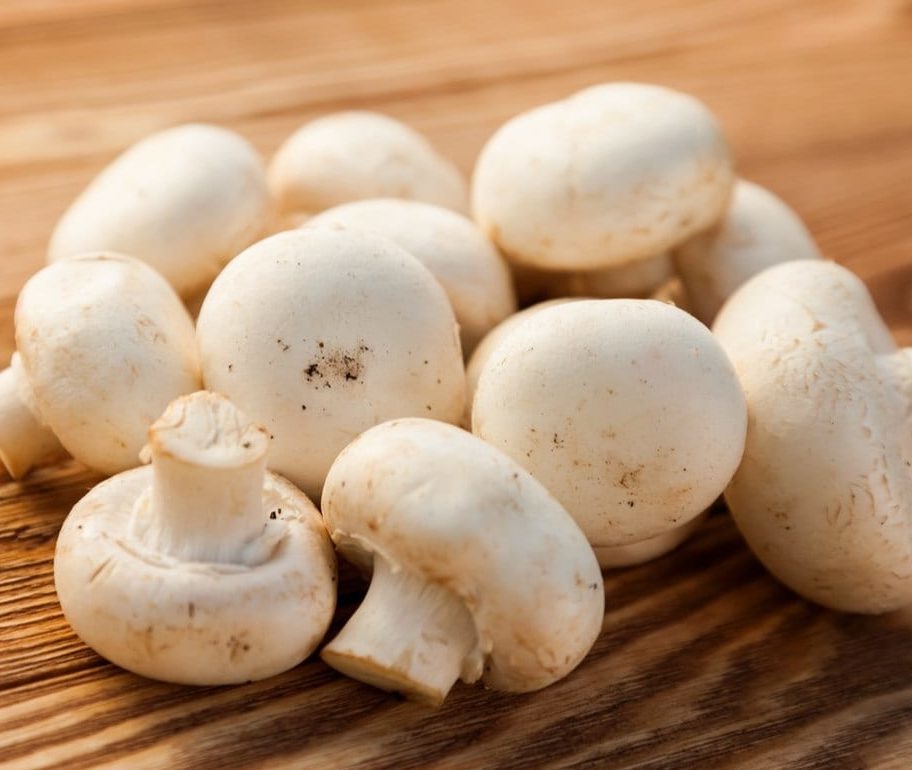
Before the Phase II study, Dr. Twardowski and his colleagues conducted a Phase I clinical trial examining white button mushroom powder in patients whose PSA levels had continued to rise following prostate cancer treatment.
The study, published in the journal Cancer in 2015, enrolled 36 patients. Its primary purpose was to evaluate feasibility and safety, while secondary objectives included measuring PSA changes and investigating potential effects on immune-related markers.
The researchers reported that 13 of 36 participants, approximately 36%, experienced some decrease in PSA from baseline after three months of treatment. However, only four of 36 participants, approximately 11%, met the study’s defined criteria for a partial or complete PSA response.
Two participants experienced PSA declines to undetectable levels that had persisted for 49 and 30 months, respectively, at the time the research was reported. These observations were noteworthy but involved a small number of patients and did not establish the supplement as an effective treatment for prostate cancer.
What Is the Difference Between a PSA Decrease and a Treatment Response?
A modest change in PSA does not necessarily satisfy the criteria researchers use to define a meaningful response. In this study, the investigators distinguished any decrease in PSA from more substantial reductions meeting prespecified response definitions.
The overall PSA response rate was 11%, while approximately one-third of participants experienced some decrease. Those percentages describe different measures and should not be used interchangeably.
Because this was an early-phase study without a randomized control group, its findings could not establish whether mushroom powder was responsible for improved cancer outcomes.
What Did the Researchers Learn About Immune Function?
The investigators also evaluated immune-related measurements, including cytokines and myeloid-derived suppressor cells. These cells can influence immune responses and have been investigated for their role in the cancer microenvironment.
Exploratory findings suggested that white button mushroom preparations might influence certain immune-related pathways. However, the mechanism of any potential clinical effect remains uncertain, and changes in laboratory biomarkers do not by themselves demonstrate an anticancer benefit.
The preliminary findings helped motivate a larger, randomized Phase II study designed to evaluate PSA changes more systematically.
Read the original research: A Phase I Trial of Mushroom Powder in Patients With Biochemically Recurrent Prostate Cancer.
How Was the Phase II White Button Mushroom Trial Designed?
The subsequent Phase II investigation, registered as NCT04519879, evaluated white button mushroom extract in patients with prostate cancer under two different clinical circumstances: those experiencing biochemical recurrence after prior local treatment and those with favorable-risk disease undergoing active surveillance.
City of Hope Medical Center was the study sponsor. The registered trial began on May 10, 2021, and included sites and investigators involved in the broader research effort. Saint John’s Cancer Institute’s original article documented its participation in this work through Dr. Twardowski.
Cohort 1: Biochemically Recurrent Prostate Cancer
The first cohort included patients who had previously received local prostate cancer treatment, such as surgery or radiation, and subsequently developed a rising PSA without detectable distant metastases under the study’s eligibility criteria.
The research compared observation with the use of white button mushroom supplementation, with PSA measurements helping investigators assess whether the experimental intervention produced a measurable effect.
One primary objective was to examine the proportion of participants experiencing a PSA reduction at approximately 12 weeks.
Cohort 2: Favorable-Risk Prostate Cancer on Active Surveillance
The second cohort included patients with newly diagnosed favorable-risk prostate cancer who had not undergone definitive local treatment and were being managed through active surveillance.
Active surveillance involves scheduled PSA testing, clinical evaluation, imaging, and biopsies when appropriate, with definitive treatment considered if findings suggest that the cancer is progressing or the patient’s circumstances change.
In this cohort, the study evaluated relative changes in PSA over approximately 48 weeks and investigated whether mushroom supplementation influenced other clinical or biological findings.
Study Monitoring and Additional Measurements
Depending on the study cohort and assignment, the research protocol involved prescribed supplement use or observation, questionnaires, PSA measurements, blood samples, and other evaluations. Investigators also examined potential effects on immune activity, hormone-related measurements, and prostate cancer characteristics.
The study protocol was intended to provide more reliable evidence than the earlier uncontrolled investigation. Its design does not mean that the intervention was proven effective, and participation was governed by clinical eligibility and research oversight.
What Is the Current Status of Clinical Trial NCT04519879?
ClinicalTrials.gov lists the randomized Phase II white button mushroom prostate cancer study as suspended as of its August 2026 registry update.
The record identifies a suspension associated with delinquent reporting to the study’s data and safety monitoring committee, beginning May 26, 2026. This administrative description does not establish that the experimental treatment was ineffective or unsafe. It also does not establish when or whether study activities might resume.
The registry reports 133 actual participants enrolled and an actual primary completion date of March 31, 2026. The estimated study completion date was October 1, 2026. At the time of this November 2026 update, the registry did not provide posted Phase II results establishing the intervention’s efficacy.
This article should not be used to determine current eligibility or request enrollment in NCT04519879. The original 2021 recruitment criteria and contact instructions are retained only in the historical study record rather than being presented as a current opportunity.
For the official study history and the latest registered status, visit ClinicalTrials.gov — NCT04519879.
Can Eating White Button Mushrooms Treat or Prevent Prostate Cancer?
Current clinical evidence does not establish that eating white button mushrooms, drinking mushroom extracts, or taking mushroom supplements prevents prostate cancer, eliminates tumors, or replaces standard treatment.
The early clinical study evaluated specially prepared mushroom powder under controlled research conditions. Findings from that investigation cannot be applied directly to ordinary dietary consumption or over-the-counter supplements, which may differ in composition, concentration, and quality.
Patients undergoing prostate cancer treatment should discuss dietary supplements with their oncology team before using them. Supplements can have adverse effects, vary in manufacturing quality, or interact with medications and other aspects of care.
Why Might a Natural Product Still Be Worth Investigating?
Natural products have contributed to the development of important medicines, and compounds found in plants, fungi, and other biological sources remain subjects of cancer research.
Scientific interest in a natural compound is not proof of therapeutic value. Investigators must determine whether it has a meaningful biological effect, whether that effect translates into better clinical outcomes, and whether the intervention is sufficiently safe and consistent for patient use.
What Treatments Are Established for Prostate Cancer?
Depending on the stage, grade, risk classification, and patient circumstances, prostate cancer care may involve active surveillance, surgery, radiation therapy, hormone therapy, systemic medications, or clinical trials.
Patients with biochemical recurrence after treatment may need additional evaluation to determine whether observation, imaging, salvage treatment, systemic therapy, or another approach is appropriate.
Investigational mushroom supplements should not replace recommended surveillance, established treatment, or follow-up testing.
Learn more about Prostate Cancer Diagnosis and Treatment at Saint John’s Cancer Institute.
Finding Active Prostate Cancer Clinical Trials at Saint John’s
Although the white button mushroom trial is no longer listed as actively enrolling on ClinicalTrials.gov, Saint John’s Cancer Institute continues to participate in prostate cancer clinical research.
The Institute maintains a Clinical Trials directory that includes prostate cancer research studies and a searchable listing of available opportunities. Clinical trial eligibility varies according to diagnosis, stage, previous treatments, laboratory findings, overall health, and other study-specific requirements.
Przemyslaw Twardowski, MD, continues to be associated with clinical research and the treatment of genitourinary cancers at Saint John’s Cancer Institute.
Patients interested in research participation should review the currently listed studies and contact the clinical research team to confirm whether a trial is enrolling and whether their medical history may meet its eligibility criteria.
Explore: Active and Searchable Clinical Trials at Saint John’s Cancer Institute.
What the White Button Mushroom Trial Contributes to Prostate Cancer Research
The white button mushroom prostate cancer studies illustrate how preliminary laboratory findings and early patient observations can lead to more rigorous clinical investigation. Dr. Przemyslaw Twardowski and his collaborators helped document PSA and immune-related changes in a 2015 Phase I study, providing a scientific basis for a larger randomized Phase II trial. Although the subsequent study is listed as suspended and its efficacy results have not been posted, the research remains a meaningful example of the process required to evaluate experimental approaches to prostate cancer treatment.
Patients exploring prostate cancer research can review the Active Clinical Trials directory, learn more about Przemyslaw Twardowski, MD, or visit the Prostate Cancer program page for information about established treatment and evaluation options.
Sources & Further Reading
- ClinicalTrials.gov — White Button Mushroom Supplement Phase II Trial (NCT04519879)
- Twardowski PW, et al. — Phase I Study of White Button Mushroom Powder in Biochemically Recurrent Prostate Cancer (Cancer, 2015)
- National Library of Medicine — Full Text of the 2015 Phase I Study
- National Cancer Institute — White Button Mushroom Phase II Trial Description
- Saint John’s Cancer Institute — Active Clinical Trials
- Saint John’s Cancer Institute — Przemyslaw Twardowski, MD
- Saint John’s Cancer Institute — Prostate Cancer
About the Media
Original physician interview and video production: Saint John’s Cancer Institute Marketing & Media Development, November 2021.