

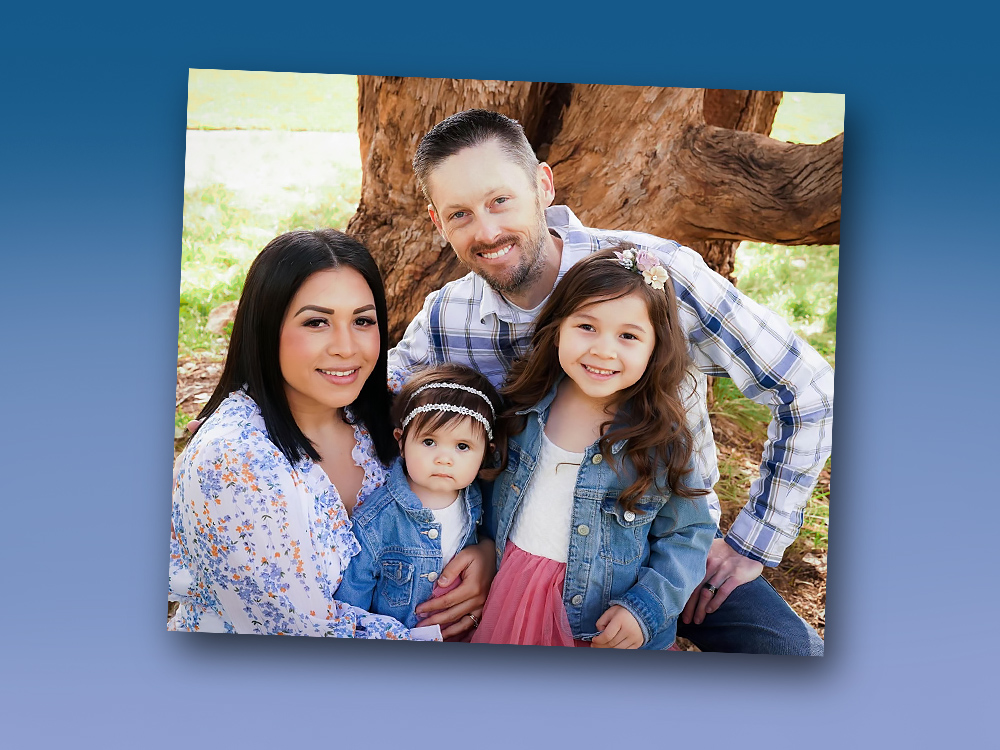
Stage IV Melanoma of Unknown Primary: Michael Antonson’s Journey With Dr. Kim Margolin
When Michael Antonson, a retired U.S. Air Force technical sergeant, became seriously ill in early 2019, his symptoms initially suggested a condition affecting his lungs. After weeks of worsening illness, hospital care, and additional testing, physicians diagnosed stage IV melanoma that had spread to multiple organs—without identifying an original skin tumor. In this original May 2023 testimonial, Mike describes how medical oncologist Kim Margolin, MD, helped guide his treatment through targeted therapy, immunotherapy, and a prolonged recovery.
Mike’s experience involved difficult diagnostic questions, rapid changes in his health, and treatment decisions made in the context of extensive metastatic disease. His story also reflects the importance of his wife and family, his trust in Dr. Margolin, and his determination to return to activities he valued, including fitness and automobile racing.
At the time of the 2023 interview, Mike reported that he had completed approximately two years of immunotherapy and was considered to be in complete remission. That milestone describes his condition at the time of publication and should not be interpreted as a verified update on his health today.
When Severe Illness Revealed Metastatic Melanoma
In February 2019, Mike was admitted to a hospital in Riverside after developing severe sweating, fatigue, persistent fevers, and other symptoms that initially appeared consistent with pneumonia. Antibiotic treatment did not resolve his condition, and additional diagnostic testing revealed widespread abnormalities.

Imaging identified lesions in several organs, including both lungs, the liver, spleen, and spine. Mike described his illness as “melanoma of the organs,” reflecting the extent of the disease and the absence of an obvious original skin lesion.
His original account describes substantial changes in his anatomy associated with the tumor burden, particularly involving his right lung. Dr. Margolin later reviewed imaging showing extensive disease, including a large mass affecting the right side of his chest.
Because melanoma most commonly arises in the skin, a diagnosis of metastatic melanoma without an identifiable primary tumor can be unexpected. In Mike’s case, the lung findings initially led clinicians to investigate and treat a presumed lung cancer before the diagnosis was clarified.
An Initial Diagnosis of Lung Cancer
Mike’s original testimonial describes an initial diagnosis of lung cancer and treatment involving chemotherapy and radiation during his hospitalization. Further evaluation subsequently established that the malignancy was melanoma rather than a primary lung cancer.
He was referred to City of Hope, where Dr. Margolin was practicing at the time. Her evaluation helped guide a change in the treatment approach to address the melanoma diagnosis and its molecular characteristics.
The distinction between primary lung cancer and melanoma metastatic to the lungs is important because the diseases differ in their biology and treatment. Pathological examination and, when appropriate, specialized immunohistochemical or molecular testing help clinicians establish the diagnosis.
What Is Melanoma of Unknown Primary?
Melanoma of unknown primary refers to melanoma identified in lymph nodes, organs, or other tissues when the original site cannot be established after appropriate clinical evaluation. An identifiable skin lesion may be absent, or a previous lesion may no longer be apparent.
The inability to identify the primary site does not mean that the cancer originated in the lungs or another organ where metastatic lesions were discovered. Once melanoma has been confirmed, clinicians assess disease extent and relevant tumor characteristics to determine treatment options.
Mike’s diagnosis illustrates why a multidisciplinary diagnostic process is important when a cancer presents in an unusual way.
Meeting Dr. Kim Margolin and Developing a Treatment Plan
Mike met Kim Margolin, MD, after his case was referred to City of Hope in 2019. Dr. Margolin specializes in melanoma and other cutaneous cancers, with extensive experience in immunotherapy and clinical research.
Mike describes developing confidence in her approach during a period when he was critically ill and facing considerable uncertainty.
“Dr. Margolin came into the picture and basically saved my life. She didn’t sugar coat anything. I’ll follow her wherever she goes,” says Mike.
When Dr. Margolin subsequently joined Saint John’s Cancer Institute, Mike continued his care with her in Santa Monica, traveling a considerable distance to maintain that physician relationship.
His experience highlights the importance that patients may place on continuity, clear communication, and shared treatment decisions when managing a serious diagnosis.
Watch Michael Antonson Tell His Melanoma Story
In this original May 2023 video, Mike describes his diagnosis, hospitalization, treatment experiences, rehabilitation, and relationship with Dr. Margolin. The interview includes perspectives from his clinical team and reflects his condition and experience at the time it was recorded.
Michael Antonson and Dr. Kim Margolin Discuss Stage IV Melanoma
Retired U.S. Air Force technical sergeant Michael Antonson discusses his stage IV melanoma diagnosis and treatment with Kim Margolin, MD, at Providence Saint John’s Health Center. Original interview: May 2023.
Understanding the BRAF Mutation and Targeted Treatment
After Mike’s melanoma diagnosis was established, molecular findings helped inform his treatment plan. His original account identifies a BRAF mutation, a genetic alteration found within the tumor that may make certain targeted treatments appropriate.
The BRAF gene is involved in signaling pathways that regulate cell growth. Certain BRAF mutations, particularly BRAF V600 variants, can activate these pathways in melanoma cells. Medications known as BRAF inhibitors, generally used with MEK inhibitors, can interrupt parts of this signaling process.
A BRAF mutation does not, by itself, establish that a tumor is melanoma rather than lung cancer. Mutations involving BRAF can occur in different cancer types. The diagnosis requires consideration of pathology and other clinical information.
Dr. Margolin is very focused and very determined. I found my trust in her quickly. The thing about her is, even if it’s something small, she wants to attack it and figure it out.
– Mike Antonson
BRAF Tumor Mutations Are Different From Inherited Cancer Risk
Most BRAF mutations identified in melanoma are somatic mutations, meaning they developed in tumor cells rather than being inherited throughout the body. They are commonly evaluated through molecular testing of cancer tissue or other clinically appropriate tumor-testing methods.
Testing a healthy person for a typical melanoma-associated BRAF tumor mutation is not an established way to predict whether that person will develop melanoma.
Inherited susceptibility to melanoma involves different considerations, including personal and family cancer history and, in selected circumstances, hereditary cancer risk assessment.
For patients diagnosed with melanoma, tumor molecular testing may help determine eligibility for specific treatments, depending on the disease stage and clinical circumstances.
How BRAF and MEK Inhibitors Treat Melanoma
In selected patients with advanced BRAF V600-mutant melanoma, combinations of BRAF and MEK inhibitors can produce tumor responses, sometimes relatively quickly. Approved regimens include combinations of medications that act at different points in the MAPK signaling pathway.
These treatments do not work for every patient, and some cancers develop resistance. Other patients may experience prolonged benefit. Targeted therapy can also cause adverse effects that require monitoring, dose adjustments, or treatment changes.
The effectiveness and durability of treatment vary among individuals. Neither treatment response nor the timing of resistance can be assumed from the presence of a BRAF mutation alone.
Learn more about Targeted Therapy for Melanoma at Saint John’s Cancer Institute.
Targeted Therapy Followed by Immunotherapy: Mike’s Treatment Sequence
Mike’s original account describes receiving targeted treatment for approximately four weeks after the melanoma diagnosis was clarified. Dr. Margolin then identified a concerning change involving his liver, and his treatment was switched to combination immunotherapy.
The subsequent regimen involved nivolumab (Opdivo) and ipilimumab (Yervoy), medications that act on immune checkpoint pathways. These treatments are used in selected patients with advanced melanoma but can cause significant immune-related adverse effects.
For Mike, decisions about treatment sequence were made during a period of serious illness and complicated clinical findings. His experience should not be interpreted as a standard sequence that every patient with a BRAF mutation should follow.
Why Treatment Sequence Matters
Targeted therapy and immunotherapy work differently. BRAF/MEK inhibitors act on molecular signaling within susceptible tumors, while immune checkpoint inhibitors modify immune responses that may help the body recognize and attack cancer.
Immunotherapy can produce durable responses in some patients, but it does not benefit everyone and may require time to demonstrate effectiveness. Targeted therapy may achieve relatively rapid disease control in selected patients, although resistance can emerge.
The phase III DREAMseq study compared treatment sequences in patients with previously untreated, advanced BRAF V600-mutant melanoma. In that trial, patients assigned to begin with nivolumab plus ipilimumab had better two-year overall survival than those assigned to begin with dabrafenib plus trametinib.
These findings support the importance of treatment sequence, but the appropriate approach still depends on disease burden, symptoms, organ function, prior treatment, potential toxicity, and individual clinical circumstances.
Immunotherapy With Opdivo and Yervoy
Nivolumab blocks the PD-1 immune checkpoint, while ipilimumab targets CTLA-4. Both pathways are involved in regulating T-cell activity. Blocking these inhibitory signals can increase immune responses against melanoma in some patients.
Combination nivolumab and ipilimumab is an established treatment approach for selected patients with advanced melanoma. It is not automatically appropriate for every advanced cancer, and its use involves evaluation of potential benefits and risks.
Immune-related adverse effects can involve the intestines, liver, lungs, skin, endocrine organs, and other tissues. Patients receiving these drugs require appropriate monitoring, and some adverse events may be serious.
In the original testimonial, Dr. Margolin explained one of the potential advantages of a successful immune response:
“When melanomas respond to immunotherapy, it responds for a longer period of time,” says Dr. Margolin.
Her observation reflects the possibility of durable benefit. However, it does not guarantee a prolonged response for an individual patient or establish that targeted therapy cannot provide lasting disease control.
The Art of Medicine: Applying Evidence to an Individual Patient
The title of Mike’s original testimonial refers to the “art of medicine”: the process of applying scientific evidence, clinical experience, and individual circumstances to decisions that may not have a simple or predictable answer.
For Dr. Margolin, Mike’s care involved considering the extent of his disease, his response to initial treatment, changes in organ function, and the potential advantages and risks of available therapies.
The term does not mean abandoning evidence-based treatment. Instead, it recognizes that applying medical evidence to a complex individual case often requires judgment, careful monitoring, and reassessment when circumstances change.
Learn more about Immunotherapy for Melanoma and current treatment options through the Borstein Family Foundation Melanoma Program.
Critical Illness, Rehabilitation, and Mike’s Recovery
Before his melanoma diagnosis was established, Mike experienced a substantial decline in his health. His original account describes losing weight from approximately 177 pounds to 120 pounds over a period of about two months, as well as repeated medical procedures, difficulty eating, and an extended hospitalization.
He spent approximately three weeks in intensive care, much of which he recalls only incompletely because of the severity of his illness and sedation during treatment.
“I don’t remember 90 percent of that. I do remember my wife crying because the doctors were telling her prep herself.”
Mike also recalled the uncertainty surrounding his prognosis during that hospitalization:
“The doctors were not confident I was going to make it. So, they asked me to talk to my friends and family… I remember thinking in my head, Nah, I’m good. I’m going to fight this and beat this… I never thought I was going to die…”
His experience reflects the physical and emotional effects of serious illness, including what he remembered about the support of his wife and the communication he received from his care team.
I had to retrain my whole body to sit up, stand, and then walk. It was weird to go from 2 hours in the gym to learning how to walk again.
– Mike Antonson
Regaining Strength Following Treatment
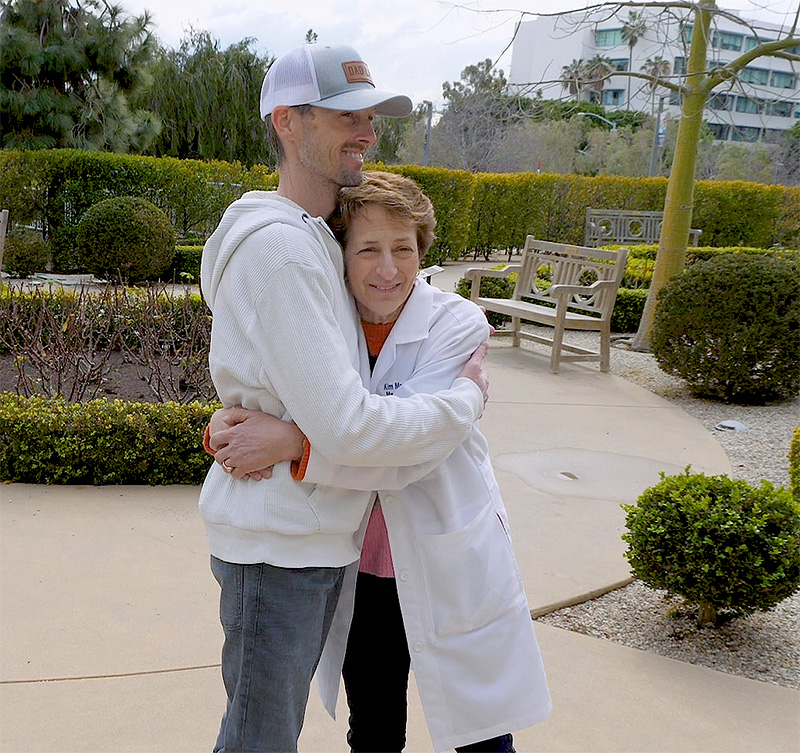
Mike had maintained an active lifestyle before becoming ill, including regular exercise and weight training. During his hospitalization and subsequent recovery, he experienced profound weakness and had to rebuild his ability to perform activities that had previously been routine.
As his condition improved, he recalled a turning point: “One day everything flipped. I could eat soft foods again.” His ability to tolerate food and gradually regain strength became meaningful milestones in his recovery.
Mike attributed part of his capacity to endure treatment to his previous physical conditioning. While overall health and functional status can influence treatment tolerance, a patient’s fitness or determination cannot guarantee survival or a response to immunotherapy.
Patients recovering from serious illness often benefit from individualized rehabilitation and supportive care, with activity recommendations based on medical condition and safety.
A Documented Complete Remission in 2023
The original May 2023 article reports that Mike received immunotherapy for approximately two years and was considered to be in complete remission at the time of the interview.
Complete remission generally means that available examinations and testing show no detectable evidence of cancer at a particular point in time. It does not necessarily establish a permanent cure or eliminate the possibility of recurrence.
Mike’s reported treatment response is a significant part of his story, but the article does not establish his current disease status, medications, or surveillance findings.
Reflecting on the changes in his condition, Mike said:
I went from essentially dying, and then to weeks later being discharged.
– Mike Antonson
Beyond Cancer: Mike’s Military Service and Passion for Racing
Mike served in the United States Air Force and retired as a technical sergeant, E-6. His original account includes two deployments to Afghanistan and describes working around burn pits and spending time outdoors during military service.
These experiences are part of Mike’s military history, but the testimonial does not establish that burn-pit exposure, deployment conditions, or a particular environmental factor caused his melanoma. Individual cancer causation cannot be determined from exposure history alone.
His sense of humor remained evident in the original interview. When discussing his retirement rank and eligibility for promotion, Mike recalled the experience with a laugh.
Returning to Automobile Racing

Before his illness, Mike competed in automobile events involving high-performance Mustangs, including the Search for the Ultimate Street Car series. Racing required physical stamina and concentration, both of which became more challenging after his hospitalization and recovery.
“You must be in shape,” Mike explained when discussing the demands of racing. “Those NASCAR guys are out there for a long time, and it’s physically exhausting.”
He also described adjusting to changes in his endurance and heart rate after treatment:
“My heart rate is always in the 90’s or 100’s. That’s the new norm. I have new norms now. I must pace myself. After 40 minutes, I must stop.”
His account illustrates the importance of activities that give patients a sense of personal identity beyond cancer, while acknowledging that physical limitations and recovery needs may persist after treatment.
Mike’s Advice to Others Facing Cancer
In his original testimonial, Mike shared several reflections about treatment, family, faith, motivation, and the importance of seeking medical evaluation when something seems wrong.
The following statements preserve his advice as originally recorded in the article. They express his personal experience, not medical instructions or evidence that a particular attitude or level of fitness determines cancer outcomes.
- Don’t focus so much on the cancer. Focus on the future, focus on what motivates you, on the lifestyle you had before.
- A lot of people asked me what my motivation was, it was my faith.
- My wife, she was there every day in the hospital; she was amazing.
- Dr. Margolin gave me a lot of motivation.
- I’ve heard sad stories of people who aren’t positive, and they give up right when they’ve been diagnosed. I always wanted to tell people what another person who had cancer for 10 years told me, and that is to stay positive. Even if you have one day left. Do you want to spend that day sad, and depressed, or happy?
- I tried to fight through everything. It took me a lot to go to the hospital. Now, I would say, go get checked as soon as possible, and talk to your doctor about your concerns.
- Work Out. If my body wasn’t in the condition it was in, and healthy, my body wouldn’t have made it. If I wasn’t healthy, my body would have been too weak to fight all that was going on.
Mike’s reflections show how his wife, personal beliefs, exercise, and goals helped him cope with the experience. Other patients may find support in different ways, and no one should feel that they must remain positive or physically active to deserve care or achieve a favorable outcome.
His advice to seek medical evaluation when symptoms persist is especially important. Mike’s initial symptoms were severe and did not improve with the treatment first prescribed, prompting further investigation that ultimately changed his diagnosis.
The Role of Medical Oncology and Individualized Melanoma Care
Mike’s experience demonstrates why the accurate diagnosis of a cancer and understanding its molecular features are important for treatment planning. Melanoma of unknown primary can present differently from a typical skin lesion, and patients with extensive metastatic disease may require reassessment as their clinical condition changes.
Dr. Margolin’s approach to Mike’s care involved weighing the expected benefits of targeted treatment and immunotherapy against the urgency of his illness, the effects of treatment, and the condition of his organs.
The Borstein Family Foundation Melanoma Program at Saint John’s Cancer Institute provides clinical expertise in surgical oncology, medical oncology, immunotherapy, targeted therapy, and cancer research. Current treatment options depend on individual diagnosis and clinical circumstances.
Learn more about Kim Margolin, MD, Melanoma Diagnosis and Staging, and Active Clinical Trials at Saint John’s Cancer Institute.
Michael Antonson’s Story: Trust, Treatment, and Life Beyond Melanoma
Michael Antonson’s May 2023 testimonial documents an unusual presentation of stage IV melanoma, an initial diagnostic challenge, and the medical decisions that led from targeted therapy to immune checkpoint treatment under the care of Kim Margolin, MD. His account also preserves the difficult experience of hospitalization and rehabilitation, the support of his family, and his return to activities that remained important to him. At the time of the interview, Mike reported completing two years of immunotherapy and being in complete remission, a meaningful milestone in his individual cancer journey.
For information about current Melanoma Immunotherapy, Targeted Therapy, or Clinical Trials, explore the Borstein Family Foundation Melanoma Program at Saint John’s Cancer Institute. You can also learn more about Dr. Kim Margolin’s work in melanoma and immunotherapy or call 310-829-8317 for information about specialist evaluation.
Sources & Further Reading
- DREAMseq Trial — Immunotherapy and Targeted Therapy Sequencing in Advanced BRAF-Mutant Melanoma
- National Cancer Institute — Immunotherapy as Initial Treatment for Advanced BRAF-Mutant Melanoma
- Johns Hopkins Medicine — BRAF Mutation and Cancer
- National Cancer Institute — Melanoma Treatment Evidence
- Saint John’s Cancer Institute — Immunotherapy for Melanoma
- Saint John’s Cancer Institute — Targeted Therapy for Melanoma
- Saint John’s Cancer Institute — Kim Margolin, MD