

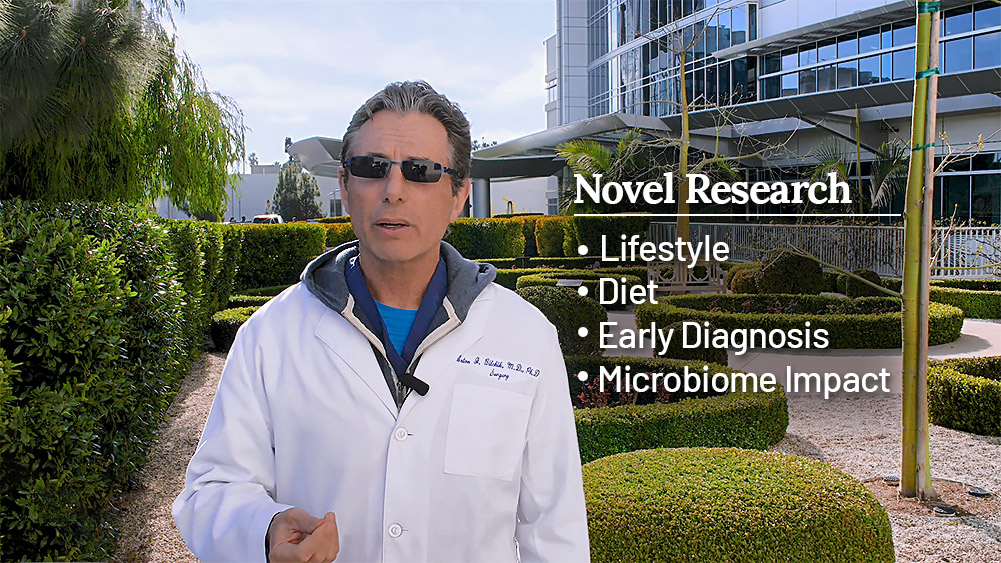
What can individuals do to lower their risk of cancer, and how might research into the immune system, inflammation, and the microbiome improve cancer prevention? Anton Bilchik, MD, PhD, a surgical oncologist and gastrointestinal cancer researcher at Saint John’s Cancer Institute, discusses the relationship between lifestyle, biology, early detection, and emerging areas of scientific investigation.
Cancer prevention is not a single action or a guarantee. Cancers develop through different biological processes, influenced by factors such as aging, inherited genetic changes, environmental exposures, infections, and lifestyle. Some risks can be reduced through established prevention measures, while others remain outside an individual’s control. Understanding these differences helps patients make informed decisions without assuming that every cancer is preventable.
“We are studying lifestyle; the role of diet, of processed foods, to better understand cancer prevention.”
— Anton Bilchik, MD, PhD
Understanding Cancer and the Factors That Influence Its Development
What Is Cancer?
Cancer is a disease of genetic changes that disrupt normal controls over cell growth, division, and survival. These changes may be inherited, develop during a person’s lifetime, or arise from damage associated with environmental exposures and biological processes. Not all genetic changes lead to cancer, and the development of a malignant tumor often involves multiple changes accumulating over time.
Established cancer risk factors include tobacco exposure, alcohol consumption, ultraviolet radiation, certain infections, excess body weight, and some inherited genetic conditions. Age is also an important factor because cancer-related genetic changes can accumulate throughout life. The National Cancer Institute’s overview of cancer genetics explains how these changes affect normal cellular function.
Why Is Cancer Prevention Research Important?
Cancer remains a major cause of illness and death worldwide, with population growth and aging expected to contribute to increasing numbers of diagnoses in coming decades. Research is essential for identifying preventable risk factors, improving screening methods, developing more effective treatments, and understanding why cancer behaves differently among individuals and populations.
Researchers also study how nutrition, physical activity, the immune system, chronic inflammation, and microorganisms living in the body may influence cancer development. Some relationships are well established, while others are still being investigated. These distinctions are important when translating scientific discoveries into practical recommendations for patients.
What Cancer Risks Can Individuals Reduce?
Although cancer cannot always be prevented, evidence supports several measures that can lower the risk of particular cancers. These include avoiding tobacco, limiting or avoiding alcohol, maintaining regular physical activity, following a nutritious dietary pattern, protecting skin from excessive ultraviolet radiation, and receiving recommended vaccinations against cancer-associated infections.
Risk reduction is not the same as eliminating risk. A person who follows every recommended prevention measure may still develop cancer, and a cancer diagnosis should never be interpreted as evidence that someone failed to make healthy choices.
Examples of Established Cancer Risk Factors
- Tobacco: Smoking and other tobacco exposures increase the risk of lung cancer and cancers involving the mouth, throat, esophagus, bladder, kidney, pancreas, stomach, cervix, and other organs.
- Alcohol: Alcohol consumption increases the risk of several cancers, including those affecting the mouth, pharynx, larynx, esophagus, liver, colon, rectum, and breast.
- Infections: Human papillomavirus (HPV) is associated with cervical and several other anogenital and oropharyngeal cancers. Chronic hepatitis B and C infections increase liver cancer risk. Helicobacter pylori infection is associated with stomach cancer and certain gastric lymphomas. Epstein-Barr virus is linked to selected lymphomas and other malignancies.
- Ultraviolet radiation: Excessive exposure to ultraviolet radiation from sunlight or tanning devices increases the risk of melanoma and other skin cancers.
- Excess body weight and physical inactivity: These are associated with increased risk of several cancers, although the biological relationships differ by cancer type.
- Inherited susceptibility: Certain inherited genetic variants increase cancer risk and may warrant specialized risk assessment or earlier screening.
These examples do not represent every possible risk factor, and associations vary in strength across different cancers. The National Cancer Institute’s cancer risk factor resources provide additional information about established and suspected causes.
The Immune System, Inflammation, and the Microbiome
One of the areas explored in Dr. Bilchik’s research discussion is the relationship between inflammation, immune function, and the microorganisms that live in and on the human body. These subjects are interconnected, but their roles in cancer development are complex and cannot be reduced to the idea that a strong immune system alone prevents cancer.
“Physical activity is enormously important. It is considered anti-inflammatory. Inflammation is an important part of cancer development.”
— Anton Bilchik, MD, PhD
How Does Chronic Inflammation Relate to Cancer?
Inflammation is a normal protective response to infection, tissue injury, or other forms of damage. Acute inflammation helps the body respond to threats and begin healing. Chronic inflammation, however, may persist for prolonged periods and contribute to tissue damage, altered cell signaling, and biological conditions associated with the development of certain cancers.
Examples include chronic hepatitis infection and liver cancer, Helicobacter pylori infection and stomach cancer, and long-standing inflammatory bowel disease and increased colorectal cancer risk. These associations have been extensively investigated, although the mechanisms and individual risks vary.
Inflammation is only one aspect of cancer biology. The presence of inflammation does not necessarily indicate cancer, and many inflammatory conditions never lead to malignancy. Similarly, routine inflammatory blood tests are not established methods for screening otherwise healthy people for cancer.
What Is the Role of the Microbiome?
The microbiome includes bacteria, viruses, fungi, and other microorganisms that inhabit the digestive tract and other parts of the body. These organisms influence digestion, metabolism, immune function, and interactions between the body and its environment. Researchers are examining whether differences in microbial communities contribute to cancer risk, treatment response, or treatment-related complications.
Particular microorganisms, such as Helicobacter pylori, have established associations with cancer. However, broader relationships between microbiome composition and cancer prevention remain an active area of investigation. There is currently no established microbiome profile that guarantees protection from cancer, and routine microbiome testing or commercial supplements should not be presented as proven cancer-prevention strategies.
How Do Stress and Immune Function Interact?
Stress can affect sleep, mood, behavior, hormones, and aspects of immune regulation. Understanding these interactions is an important subject of research, particularly for patients navigating the physical and emotional demands of illness. However, evidence does not establish that everyday psychological stress directly causes cancer or that reducing stress alone prevents malignancy.
During his discussion of physiological responses to stress, Dr. Bilchik described the relationship between stress-related hormones and immune function:
“When your heart rate is up because of stress your cortical goes up and your epinephrine goes up. It suppresses your immune system when this happens.”
— Anton Bilchik, MD, PhD
This statement reflects Dr. Bilchik’s discussion of the body’s stress response. Stress-related hormonal and immune changes are complex, and their implications for cancer development are still being studied. Managing stress can support quality of life and overall well-being, but it should not be substituted for established cancer prevention, screening, or medical care.
Watch Dr. Anton Bilchik Discuss Cancer Prevention Research
Dr. Anton Bilchik, a surgical oncologist and researcher at Saint John’s Cancer Institute, discusses how lifestyle, immune function, inflammation, and the microbiome may inform future approaches to cancer prevention. His research interests include gastrointestinal cancers, cancer biology, and opportunities to improve early detection and treatment.
Dr. Anton Bilchik discusses cancer prevention, lifestyle, immune function, and emerging directions in cancer research.
Learn more about Dr. Anton Bilchik’s surgical oncology and research background and the multidisciplinary work of the Center for Gastrointestinal and Hepatobiliary Tumors.
Practical Ways to Reduce Cancer Risk
Research into cancer prevention continues to evolve, but several actions already have meaningful evidence supporting their benefit. Decisions should be tailored to a person’s age, medical history, inherited risks, and individual circumstances.
- Avoid tobacco: Do not begin smoking or using tobacco products. People who currently use tobacco can benefit from evidence-based cessation support.
- Limit or avoid alcohol: Drinking less alcohol lowers exposure to an established cancer risk factor. Avoiding alcohol provides the greatest reduction in alcohol-related cancer risk.
- Follow a balanced dietary pattern: Emphasize vegetables, fruit, whole grains, and other nutrient-rich foods while limiting processed meats and highly processed foods.
- Stay physically active: Regular movement supports overall health and is associated with reduced risk of several cancers.
- Maintain a healthy weight when possible: Discuss individualized approaches to nutrition and physical activity with a qualified healthcare professional.
- Protect your skin: Limit excessive ultraviolet exposure and avoid tanning beds.
- Prevent cancer-associated infections: Stay current with recommended HPV and hepatitis B vaccinations and discuss testing or treatment for relevant infections when appropriate.
- Understand your family history: Share important family cancer diagnoses with your clinician to determine whether genetic counseling or modified screening may be appropriate.
- Use antibiotics appropriately: Take antibiotics when medically indicated, rather than for viral illnesses or other conditions they do not treat.
- Participate in recommended screening: Follow evidence-based screening recommendations based on age, risk factors, and personal medical history.
- Address emotional well-being: Manage stress and seek support when needed to improve health, daily functioning, and quality of life.
No single intervention eliminates cancer risk. Combining established prevention measures with appropriate screening and medical follow-up offers a practical approach to reducing avoidable risks.
Listen to Our Patients: Cancer Awareness, Screening, and Treatment
Patients who have experienced cancer often bring important perspectives to conversations about prevention, early detection, and the decisions that follow a diagnosis. Their stories illustrate how symptoms, screening, medical evaluation, treatment, and personal circumstances can shape the cancer journey.
Saint John’s Cancer Institute patients share personal perspectives on cancer awareness, screening, diagnosis, and treatment.
Hear More from the Patients Featured in the Video
These individual interviews offer additional insight into the experiences of patients treated for different types of cancer. Their stories reflect personal circumstances and outcomes rather than predictions about another patient’s treatment or prognosis.
Breast Cancer
Colon Cancer
Lung Cancer
Melanoma
Prostate Cancer
Stomach Cancer
What Cancer Screening Methods Are Available?
Cancer screening refers to testing people who do not have symptoms, with the goal of identifying certain cancers or precancerous changes before they cause noticeable problems. Screening recommendations vary according to cancer type, age, personal risk, family history, and the demonstrated benefits and harms of each test.
Established screening methods include mammography for breast cancer, cervical screening with HPV testing and/or cytology, stool-based testing or colonoscopy for colorectal cancer, and low-dose CT for selected people at elevated risk of lung cancer. PSA testing for prostate cancer involves individualized decision-making. Tests such as bronchoscopy or upper endoscopy generally serve diagnostic or specialized surveillance purposes rather than routine population screening.
Multi-Cancer Early Detection (MCED) Blood Tests
Multi-cancer early detection tests are emerging technologies designed to identify biological signals that may be associated with several types of cancer from a blood sample. Different tests evaluate different signals and cancer types, and a positive result typically requires additional diagnostic testing to determine whether cancer is present.
Providence has previously reported the availability of multi-cancer early detection testing, with Ora Gordon, MD, involved in research and implementation efforts. This work reflects interest in expanding opportunities for cancer detection, particularly for cancers without established screening programs.
However, MCED tests remain an evolving area of medicine. Their ability to reduce cancer-related deaths has not been established in randomized clinical trials, and they do not replace recommended mammograms, cervical screening, colorectal screening, or lung cancer screening. A negative MCED result does not rule out cancer, and a positive result does not establish a diagnosis without further evaluation.
Patients interested in these tests should discuss their potential benefits, limitations, follow-up requirements, and possible out-of-pocket costs with a healthcare professional. Learn more about Dr. Ora Gordon and cancer genetics and the National Cancer Institute’s guidance on multi-cancer detection research.
Are Inflammation Tests Useful for Cancer Screening?
Blood tests such as C-reactive protein (CRP) and erythrocyte sedimentation rate (ESR) may help clinicians evaluate inflammation in certain medical circumstances. CRP measures a protein associated with inflammatory responses, while ESR measures how quickly red blood cells settle in a laboratory sample.
Neither test is specific to cancer, and neither is recommended as a routine cancer-screening method for the general population. Abnormal results can occur for many reasons and require interpretation within the context of a person’s symptoms, medical history, and other findings. These tests may be useful when a clinician is evaluating a particular health concern, but they should not be presented as substitutes for recommended cancer screening.
How Can Cancer Research Improve Prevention and Early Detection?
Research continues to examine why some individuals develop cancer while others with similar exposures do not, how the immune system interacts with emerging tumors, and whether new biomarkers can improve early detection. These investigations also address why certain cancers are increasing among younger adults and how differences in healthcare access influence outcomes.
Important research questions include how microbiome changes influence cancer biology, whether specific biomarkers can identify disease before symptoms develop, how inherited and acquired genetic changes interact with environmental exposures, and how to evaluate novel tests without exposing patients to unnecessary procedures or false reassurance.
“If we can detect cancer or precancer in an earlier stage, we have a much better chance of curing people.”
— Anton Bilchik, MD, PhD
Early detection can improve outcomes for many cancers, but not all screening tests have demonstrated a reduction in cancer mortality. Screening programs require careful research to establish whether their benefits outweigh possible harms, including false-positive results, overdiagnosis, unnecessary procedures, and missed cancers.
Addressing Barriers to Cancer Prevention and Screening
Understanding cancer risk is only one part of prevention. People may face financial, geographic, cultural, linguistic, or logistical barriers that make obtaining recommended screening and follow-up care difficult. Insurance coverage, transportation, access to primary care, time away from work, and trust in healthcare systems can influence whether individuals receive timely evaluation.
Community partnerships and outreach programs can help address these barriers by connecting patients with reliable information, screening resources, and appropriate medical care. Saint John’s Cancer Institute has participated in collaborative efforts such as the Stand Up To Cancer Colorectal Cancer Health Equity Dream Team, which focused on improving colorectal cancer screening participation in medically underserved communities.
These efforts reflect a broader goal of cancer prevention research: translating scientific knowledge into practical services that people can understand, access, and use.
Cancer prevention begins with understanding risk, taking evidence-based steps to reduce avoidable exposures, and participating in appropriate screening and medical follow-up.
At Saint John’s Cancer Institute, clinical care and cancer research inform efforts to improve early detection, understand cancer biology, and connect patients with multidisciplinary expertise. Learn more about the Center for Gastrointestinal and Hepatobiliary Tumors and the Institute’s approach to cancer care.
Sources & Further Reading
- National Cancer Institute: The Genetics of Cancer — Genetic changes and cancer development.
- National Cancer Institute: Risk Factors for Cancer — Established and suspected cancer risks.
- National Cancer Institute: Cancer Screening Tests — Established screening methods and emerging technologies.
- National Cancer Institute: Questions and Answers About Multi-Cancer Detection Tests — Benefits, limitations, and ongoing research.
- World Health Organization: Cancer — Global cancer risks, prevention, and early detection.
- American Cancer Society: Alcohol Use and Cancer — Established alcohol-related cancer risks.
- National Cancer Institute: Cancer Prevention Overview (PDQ) — Review of prevention research.
- Inflammation and Cancer — Review of biological mechanisms linking chronic inflammation and cancer.
- Does the Immune System Naturally Protect Against Cancer? — Scientific review of immune surveillance.