

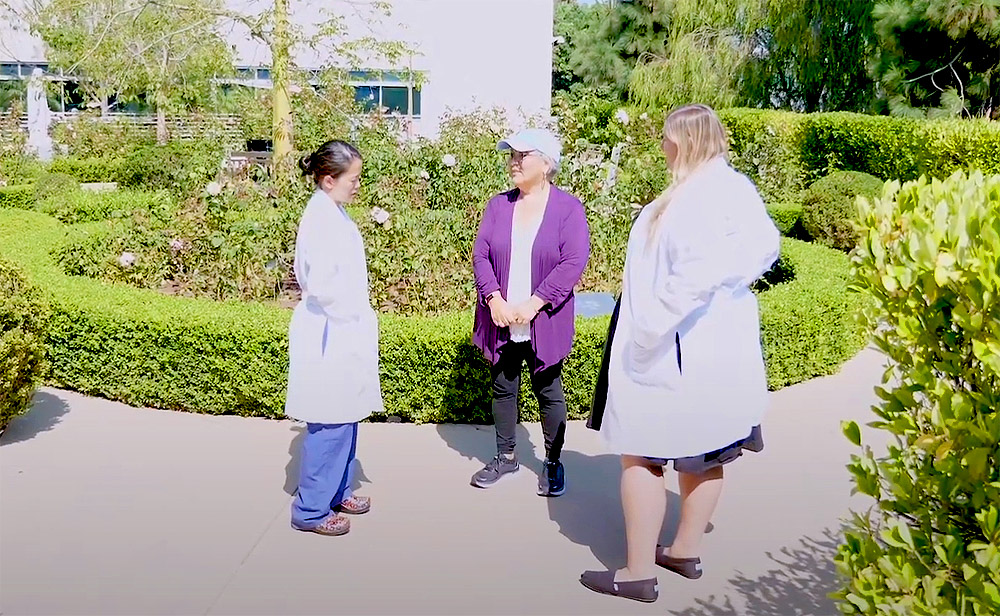
Susi Rodriguez Shapiro’s Breast Cancer Journey: Finding Strength, Trust, and Support During Treatment
For Susi Rodriguez Shapiro, also known as Señorita Shapiro, surviving stage 2 breast cancer involved more than surgery, chemotherapy, and radiation. Diagnosed during the COVID-19 pandemic, she found strength through her faith, family, and a multidisciplinary team at the Margie Petersen Breast Center that she affectionately called “Team Susi.” Her advice to other patients is to find a medical team they can trust.
Susi’s journey began when she noticed an unusually large lump in her armpit that seemed to appear almost overnight. Concerned by the sudden change, she visited her primary care physician, who recommended further evaluation.
She was referred to the Margie Petersen Breast Center at Providence Saint John’s Health Center, where mammography and biopsy helped establish her diagnosis of stage 2 breast cancer.
The diagnosis came during the height of the COVID-19 pandemic, when hospital restrictions, social distancing, and uncertainty created additional challenges for patients and their families.
A spiritual woman with a strong faith in God, Susi turned to prayer for comfort. She also placed her trust in the physicians and supportive care professionals who would guide her through treatment.
I felt like they were all part of Team Susi, and that was a really good feeling.
At the time of her original interview, Susi was celebrating one year without evidence of cancer. That milestone was especially meaningful following the physical and emotional challenges of her treatment.
The Margie Petersen Breast Center: Building Team Susi
At the Margie Petersen Breast Center, Susi met specialists from several disciplines who would help develop and coordinate her treatment. The experience began with a comprehensive consultation lasting approximately three hours.
Her team included Janie Grumley, MD, breast surgical oncologist; Carol Nishikubo, MD, medical oncologist; and Robert Wollman, MD, radiation oncologist.
Each physician brought a different perspective to Susi’s diagnosis and treatment. Rather than receiving isolated recommendations, she had an opportunity to understand how surgery, chemotherapy, and radiation would fit together.
Dr. Grumley has described the importance of treating breast cancer as an individual disease rather than applying the same treatment approach to every patient. Tumor characteristics, stage, pathology, and other clinical findings help physicians determine which treatments may offer meaningful benefit.
In Susi’s testimonial, she describes the reassurance she felt after meeting her physicians:
“After meeting everyone at the Margie Petersen Breast Center, I immediately felt comfort–that their skills and talents were going to help me, and that was a good feeling–I felt like they were all part of Team Susi.”
Coordinating Care During the COVID-19 Pandemic
Because Susi received her diagnosis during the pandemic, her husband could not attend her initial consultations in person. Her care team arranged for him to participate by telephone, helping the couple hear the medical information and treatment recommendations together.
The physicians also recorded the discussions and provided Susi with a copy on a USB drive, which she received by mail approximately one week later. This allowed her and her husband to revisit information that may have been difficult to absorb during the initial appointment.
For Susi, these accommodations reinforced that her physicians understood both her medical needs and the uncertainty facing her family.
I didn’t feel like I was just another number…they explained all my possibilities, and answered all my questions…
By the end of the consultation, Susi had a treatment plan that included oncoplastic breast-conserving surgery, eight chemotherapy treatments, and 30 sessions of external-beam radiation.
Her experience reflects the role of multidisciplinary planning in breast cancer care. The appropriate combination and sequence of treatments depend on an individual patient’s diagnosis and may differ substantially from the plan Susi received.
How Breast Cancer Treatment Is Personalized
Modern breast cancer care uses pathology findings and, when appropriate, additional molecular or genomic testing to help guide treatment recommendations.
Important factors include tumor size, lymph node involvement, grade, hormone receptor status, HER2 status, and the patient’s overall health. For certain breast cancer subtypes, genomic assays may help determine whether chemotherapy is likely to provide additional benefit.
However, molecular testing is not required before every chemotherapy recommendation. The tests used and the information they provide depend on the particular breast cancer subtype and clinical circumstances.
The goal is to recommend treatment that offers meaningful cancer control while avoiding unnecessary interventions when the evidence supports a less intensive approach.
Learn more about the coordinated services available through the Margie Petersen Breast Center and the available Breast Cancer Treatment Options.
Watch Susi Rodriguez Shapiro Share Her Breast Cancer Experience
In her candid video testimonial, Susi describes the discovery of her cancer, her experience with surgery and treatment, and the people who helped her through recovery.
Her account also offers a personal look at how faith, humor, practical support, and relationships with other survivors contributed to her confidence and sense of belonging.
Susi Rodriguez Shapiro — Stage 2 Breast Cancer Survivor Testimonial
Susi Rodriguez Shapiro shares her experience with breast cancer treatment and supportive services at the Margie Petersen Breast Center.
Oncoplastic Surgery for Breast Cancer Treatment
On January 20, 2021, Susi underwent oncoplastic lumpectomy surgery with Dr. Janie Grumley.
A lumpectomy removes the cancer and an appropriate amount of surrounding breast tissue while preserving the remainder of the breast. Oncoplastic techniques may be incorporated to reshape the breast after tumor removal and help address changes in breast contour.
Susi was able to return home on the same day as her operation, an experience that marked an important first step in her treatment.
The original account described her surgical margins as clear. Surgical margin status is determined through examination of the removed tissue by a pathologist, rather than by PET imaging. In some circumstances, additional surgery may be recommended if cancer cells are identified at or near a surgical margin.
When Is Oncoplastic Lumpectomy Appropriate?
Oncoplastic breast surgery combines cancer removal with tissue rearrangement, reduction techniques, or other reconstructive methods. These approaches may allow selected patients to preserve their breast when a conventional lumpectomy would otherwise cause a substantial change in breast shape.
The decision depends on the location and extent of cancer, breast anatomy, the ability to obtain appropriate margins, anticipated radiation treatment, and individual preferences.
For appropriately selected patients, breast-conserving surgery followed by recommended radiation therapy can provide long-term survival outcomes comparable to mastectomy. However, breast conservation is not appropriate for every diagnosis, and some patients may prefer or require mastectomy.
Susi’s surgery was selected for her particular diagnosis and treatment needs. Her recovery and surgical outcome should not be interpreted as a prediction for other patients.
Learn more about Breast Cancer Surgical Treatments, including lumpectomy, mastectomy, and oncoplastic techniques.
Chemotherapy for Breast Cancer Treatment
Approximately five weeks after her surgery, Susi began chemotherapy under the care of Dr. Carol Nishikubo. Her treatment involved eight sessions administered approximately every two weeks, over a period of about sixteen weeks.
Chemotherapy uses medications that interfere with the growth and division of cancer cells. Depending on the diagnosis, chemotherapy may be recommended before or after surgery to treat cancer and reduce the risk of recurrence.
Although advances in medical oncology have improved treatment selection and supportive care, traditional chemotherapy can still affect healthy cells, particularly those that divide rapidly. This contributes to side effects such as hair loss, nausea, fatigue, changes in blood cell counts, and other symptoms that vary by medication and patient.
Some newer targeted therapies act on particular biological features of cancer cells, but they have their own potential side effects and are not interchangeable with conventional chemotherapy.
Susi knew hair loss was a possibility during treatment. Dr. Nishikubo explained when she might begin noticing changes, helping her prepare for an experience that can be emotionally difficult for many patients.
When her hair began falling out, Susi decided to take control of the moment. Rather than waiting for the remaining hair to fall out, she cut it short, photographed herself, and shared her new appearance on Facebook.
This is my new chemo-look, and now I keep it short.
For Susi, changing her hairstyle became an expression of agency during a treatment process that could otherwise feel beyond her control.
How Physicians Determine Whether Chemotherapy Is Needed
Not every person diagnosed with breast cancer requires chemotherapy. Treatment decisions depend on cancer stage, tumor biology, hormone receptor and HER2 status, lymph node involvement, recurrence risk, and other clinical considerations.
Some patients may benefit from endocrine therapy, HER2-targeted therapy, immunotherapy, or other medical treatments, depending on their cancer subtype. Certain treatments may be given in combination with chemotherapy or as alternatives when supported by clinical evidence.
The specific medication, number of treatments, and schedule are individualized. Susi’s eight-session regimen reflects her treatment plan, not a standard course for every patient with stage 2 breast cancer.
Explore Medical Treatments for Breast Cancer for information about chemotherapy, endocrine therapy, immunotherapy, and targeted treatments.
External-Beam Radiation for Breast Cancer Treatment
Radiation therapy was the final phase of Susi’s primary treatment plan. She received 30 sessions of external-beam radiation, Monday through Friday for approximately six weeks, under the care of Dr. Robert Wollman.
External-beam radiation directs high-energy radiation toward a planned treatment area to damage cancer-cell DNA and reduce the risk of cancer returning. Modern breast radiation commonly uses high-energy photons generated by a medical linear accelerator. The treatment does not make the patient radioactive.
Susi remembers the experience and the care she received from the radiation therapists.
“The machine goes right on you, and it zapped me. The two technicians were wonderful. They treated me with such dignity, and I will never forget them,” explains Susi in her testimonial.
Her gratitude toward the radiation therapy team became another meaningful part of her experience at Saint John’s.
Why Some Breast Radiation Schedules Are Shorter Today
Susi’s six-week course reflects the radiation schedule prescribed for her treatment in 2021. Radiation treatment methods and schedules have continued to evolve, with evidence supporting shorter courses for many appropriately selected patients.
For example, certain whole-breast radiation plans now commonly use approximately 15 or 16 treatments over three weeks. Some patients may be eligible for five-treatment schedules or partial-breast radiation, depending on their clinical circumstances.
Other patients still require longer treatment courses or additional radiation to a surgical cavity or nearby lymph node regions. The appropriate schedule depends on factors such as surgery, cancer characteristics, lymph node involvement, reconstruction, and treatment goals.
Shorter treatment schedules are not automatically appropriate for everyone, nor should the number of treatments alone be used to judge the quality or effectiveness of care.
Learn more about Radiation Therapy Methods for Breast Cancer, including the differences between whole-breast and partial-breast radiation.
Supportive Services at the Margie Petersen Breast Center
Susi’s treatment involved much more than the procedures and medications used to address her cancer. She also participated in supportive programs that helped her navigate recovery and return to everyday life.
Among the services she used were nutrition counseling, physical therapy, writing workshops, and mind and wellness classes. These activities provided practical guidance while creating opportunities for reflection and connection with other people affected by cancer.
For Susi, the supportive care programs became an important part of her broader recovery.
Nutrition That Respected Her Cultural Traditions
Working with a nutrition professional, Susi developed a dietary approach that incorporated foods from her Mexican cultural background while supporting her changing nutritional needs.
Rather than abandoning familiar foods, she found ways to incorporate them into a balanced eating pattern that worked for her.
Nutrition needs can change during chemotherapy, radiation, and recovery. Some patients need help maintaining adequate calorie and protein intake, managing side effects, or addressing weight changes. Recommendations should be individualized, particularly when appetite, digestion, or other medical conditions affect eating.
There is no single diet that cures breast cancer or guarantees prevention of recurrence. Oncology nutrition counseling can help patients maintain adequate nourishment and develop practical strategies consistent with their needs and preferences.
Writing Workshops and Emotional Recovery
Susi also participated in writing workshops that gave her an opportunity to examine how cancer had affected her sense of identity and mortality.
Through writing, she began to see the physical and emotional marks of her experience as signs of what she had endured.
During one workshop, she wrote: “They are scars of a warrior; I am a warrior.”
I am a warrior.
For Susi, creative expression helped transform difficult memories into a more empowering understanding of survivorship.
Writing, art, counseling, and other supportive activities may help some patients express concerns, process emotions, and connect with others. These programs complement rather than replace appropriate medical or psychiatric treatment when needed.
Mindfulness, Faith, and Shared Experiences
Already grounded in her spiritual beliefs, Susi found that the mind and wellness classes helped her focus on the present moment rather than remaining overwhelmed by uncertainty about the future.
She described this approach as “faith over fear.”
Her faith was a personal source of reassurance, while the wellness programs offered additional opportunities to develop coping skills and connect with people who understood the experience of cancer.
“One thing all of us had in common was, we were all touched by cancer.”
For many patients, supportive care may include physical rehabilitation, nutrition counseling, psychological support, spiritual care, or opportunities for peer connection. The services most helpful to one person may differ from those preferred by another.
Explore Cancer Support Services at Saint John’s for information about the broader role of supportive care during and after cancer treatment.
An Unexpected Familiar Face: Dr. Crystal Fancher
As Susi became more familiar with the Margie Petersen Breast Center, another unexpected connection made her feel even more at home.
During a follow-up visit, she noticed a familiar face in a brochure: Crystal Fancher, MD, a breast surgical oncologist at the center.
Dr. Fancher had been involved with Susi’s daughter’s Girl Scout troop and was a longtime family friend. Susi had not realized that someone she knew through her family was also part of the breast surgical oncology team.
“Is that my Crystal??,” Susi exclaimed to Rebecca Crane-Okada, Program Manager of Cancer Patient Support and Willow Sage Wellness, as she looked at the brochure.
For Susi, the discovery reinforced the sense of familiarity and belonging she had already begun to feel among the physicians, support staff, and other patients.
The Margie Petersen Breast Center was no longer simply the place where she received medical treatment. It had become a community of people whose relationships and support helped her through one of the most challenging periods of her life.
Advice for Breast Cancer Patients From Susi
Looking back on her treatment, Susi places particular importance on the trust she developed with her physicians.
When she first met Dr. Grumley and the rest of the team, she remembers feeling her nerves begin to relax. The opportunity to ask questions, understand her options, and feel supported gave her confidence in the decisions ahead.
“You need to trust them because your life is truly in their hands,” she says.
She describes the importance of finding a medical team with whom patients feel comfortable communicating.
“It’s the trust factor. If you don’t have a team you can trust, you need to find one where you do.”
For Susi, staying positive and maintaining her faith helped her navigate treatment. She also recognized the importance of allowing others to help and of connecting with patients who had faced similar challenges.
She told Saint John’s Cancer Institute that she wanted to be of service to others and help patients feel confident speaking up about their needs.
“At no point did I think, ‘this is it; I’m dying.’ I never felt my mortality when I was being treated by Team Susi.”
Her reflection captures how she experienced the reassurance and support of the people caring for her. Other patients may experience fear or uncertainty differently, and emotional responses to a cancer diagnosis are not measures of strength or treatment success.
Questions Patients Can Ask Their Breast Cancer Care Team
Susi’s story underscores the value of communication and informed decision-making. Patients may find it helpful to ask:
- What do my pathology results mean for my treatment options?
- Which specialists should be involved in my care?
- What are the potential benefits, risks, and alternatives to the recommended treatments?
- How will surgery, medical treatment, and radiation be coordinated?
- What side effects or changes should I report during treatment?
- Are nutrition, rehabilitation, counseling, or wellness resources available?
- Whom should I contact if new concerns arise between appointments?
Patients can also seek a second opinion when they want another perspective on their diagnosis or treatment options. A productive relationship with the care team includes opportunities to ask questions and participate in decisions.
Hear More From Susi on Kim Douglas’s Podcast
Susi also discussed her breast cancer experience with Kim Douglas, sharing additional reflections on treatment, recovery, and the support she received.
Listen to Susi Rodriguez Shapiro’s conversation with Kim Douglas on YouTube.
Breast Cancer Treatment, Support, and Survivorship at Saint John’s
Susi Rodriguez Shapiro’s experience reflects how coordinated breast cancer treatment and supportive services can contribute to a patient’s overall care. From oncoplastic surgery, chemotherapy, and radiation to nutrition counseling, writing workshops, and wellness programs, Susi found people who helped her address both the medical and personal challenges of cancer. Her story is a reminder that trust, communication, and connection remain important throughout treatment and recovery.
Patients can learn more about care at the Margie Petersen Breast Center, explore Breast Cancer Treatment Options, and review the supportive resources available through Cancer Support Services. For new breast concerns, diagnostic evaluation, or questions about treatment, contact the Breast Center team to discuss the appropriate next steps.
Sources & Further Reading
- Saint John’s Cancer Institute — Margie Petersen Breast Center
- Saint John’s Cancer Institute — Surgical Treatments for Breast Cancer
- Saint John’s Cancer Institute — Medical Treatments for Breast Cancer
- Saint John’s Cancer Institute — Radiation Therapy Methods for Breast Cancer
- Saint John’s Cancer Institute — Cancer Support Services
- Saint John’s Cancer Institute — Janie Grumley, MD
- Saint John’s Cancer Institute — Carol Nishikubo, MD
- Saint John’s Cancer Institute — Robert Wollman, MD
- American Society for Radiation Oncology — Whole-Breast Irradiation Clinical Practice Guideline
- American Society for Radiation Oncology — Partial-Breast Irradiation Clinical Practice Guideline (2024)