

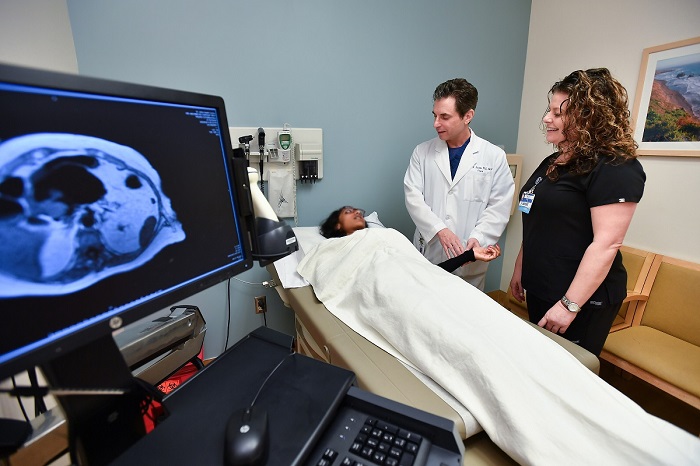
Colorectal Cancer Awareness: Screening, Early Detection, and Changing Cancer Trends
March is National Colorectal Cancer Awareness Month, an opportunity to encourage screening, recognize symptoms, and improve understanding of a disease that affects people across a wide range of ages. Although colorectal cancer has become less common among many older adults, rates have increased among younger generations. These changing patterns reinforce the importance of knowing individual risk factors and seeking appropriate medical evaluation.
Colorectal cancer includes cancers that develop in the colon or rectum. Many begin as abnormal growths called polyps, some of which can develop into cancer over time. Screening can identify certain precancerous polyps before cancer develops and detect some cancers at an earlier, more treatable stage.
Anton Bilchik, MD, a gastrointestinal surgical oncologist at Saint John’s Cancer Institute, has discussed the importance of colorectal cancer awareness, appropriate screening, and research addressing differences in cancer outcomes across communities. His educational perspective helps explain why understanding risk and improving access to screening remain essential parts of colorectal cancer prevention and early detection.
Colorectal Cancer Statistics: What the Latest Trends Tell Us
According to the American Cancer Society’s 2026 colorectal cancer statistics, approximately 158,850 new cases of colorectal cancer and 55,230 related deaths are estimated in the United States for 2026. These estimates include cancers of both the colon and rectum.
Although colorectal cancer incidence has declined overall over several decades, the trends differ by age. From 2013 through 2022, incidence increased by approximately 3% annually among adults ages 20 to 49 and by 0.4% annually among adults ages 50 to 64. During the same period, incidence decreased by approximately 2.5% annually among adults ages 65 and older.
Nearly 45% of new colorectal cancer diagnoses now occur in adults younger than 65, compared with approximately 27% in 1995. The increase has been particularly notable for cancers arising in the distal colon and rectum.
These figures are important, but they require context. Most colorectal cancers still occur in older adults, and an increase in incidence among younger adults does not mean that every younger person is at high risk. The causes of rising early-onset colorectal cancer remain under investigation.
Why Is Colorectal Cancer Increasing Among Younger Adults?
Researchers are studying several possible contributors to increasing colorectal cancer incidence among younger adults, including changes in diet, obesity, metabolic health, physical activity, environmental exposures, and the intestinal microbiome. At present, no single explanation accounts for the observed trends.
Inherited cancer susceptibility and family history are important for some patients, but many younger adults diagnosed with colorectal cancer have no known hereditary syndrome. A healthy lifestyle is beneficial, yet colorectal cancer can develop in people without recognized risk factors.
Another concern is that symptoms may initially be attributed to more common conditions, especially when a patient is younger than the usual screening population. Persistent bleeding, bowel changes, or unexplained anemia should not be dismissed solely because of age.
Dr. Anton Bilchik Discusses Colorectal Cancer Trends
In this educational video originally presented in March 2024, Dr. Bilchik discusses colorectal cancer trends, risk factors, screening awareness, and the importance of improving access to preventive care.
When Should Colorectal Cancer Screening Begin?
For adults at average risk, the American Cancer Society recommends beginning regular colorectal cancer screening at age 45 and continuing through age 75 for individuals who are appropriate candidates. Screening decisions between ages 76 and 85 should be individualized according to overall health, prior screening history, and personal preferences. Screening is generally not recommended after age 85.
People with a family history of colorectal cancer, certain inherited syndromes, previous advanced polyps, inflammatory bowel disease, or other elevated-risk conditions may need screening earlier than age 45 or at more frequent intervals. The appropriate plan should be discussed with a healthcare professional.
Screening recommendations are intended for people without symptoms. Those experiencing rectal bleeding, unexplained weight loss, persistent changes in bowel habits, or other concerning findings may need diagnostic evaluation regardless of age or screening history.
What Are the Different Colorectal Cancer Screening Options?
Several screening methods are available. The most appropriate option depends on individual risk, medical history, personal preferences, and the ability to complete the recommended test and any necessary follow-up.
Colonoscopy
Colonoscopy allows a physician to examine the colon and rectum using a flexible instrument with a camera. During the procedure, many precancerous polyps can be removed, and tissue samples can be collected when abnormalities are identified.
For average-risk adults with normal findings, screening colonoscopy is generally performed every 10 years. The interval may be shorter depending on previous polyps, family history, examination findings, or other medical considerations.
Because colonoscopy can identify and remove certain precancerous growths, it can help prevent colorectal cancer as well as detect existing disease. It requires bowel preparation and carries procedural risks that should be discussed with the care team.
Stool-Based Screening Tests
Stool-based screening tests look for evidence of colorectal cancer or precancerous changes through material collected at home. Options include fecal immunochemical tests (FIT), high-sensitivity stool blood tests, multitarget stool DNA tests, and certain stool RNA tests.
Testing intervals differ according to the method. FIT is commonly performed annually, while multitarget stool DNA testing is generally performed every three years under current American Cancer Society guidance.
These tests do not remove polyps or directly examine the entire colon. An abnormal stool-based screening result requires a timely follow-up colonoscopy to complete the screening process.
Other Screening Approaches
Additional screening approaches include CT colonography and flexible sigmoidoscopy. These methods have different strengths, limitations, and recommended intervals. Abnormal findings may require a follow-up colonoscopy.
Blood-based colorectal cancer screening tests are also available, but the American Cancer Society’s 2026 guidance does not classify them as preferred screening options. They are less effective than preferred methods at detecting advanced precancerous lesions and some early-stage cancers. They may be considered for appropriate average-risk adults who decline or do not complete preferred screening methods, following an informed discussion with their healthcare professional.
The most useful screening plan is one that is appropriate for the patient’s risk and is completed with any recommended follow-up. A positive result from a non-colonoscopy screening test should never be considered the end of the screening process.
Symptoms of Colorectal Cancer That Should Not Be Ignored
Colorectal cancer may develop without noticeable symptoms, particularly in its early stages. That is why screening is recommended for people who meet eligibility criteria even when they feel well.
When symptoms occur, they may include:
- Blood in the stool or bleeding from the rectum
- Persistent diarrhea, constipation, or other changes in bowel habits
- A feeling that the bowel does not empty completely
- Abdominal discomfort, cramping, or pain that does not resolve
- Unexplained weight loss or reduced appetite
- Iron-deficiency anemia, fatigue, or unusual weakness
These symptoms can also occur with hemorrhoids, inflammatory conditions, infections, or other noncancerous disorders. However, their cause cannot be determined reliably from symptoms alone. New, persistent, or unexplained changes should be discussed with a healthcare professional.
Significant rectal bleeding, black or bloody stools accompanied by weakness or dizziness, or severe abdominal symptoms may require urgent medical attention.
Who Is at Greater Risk for Colorectal Cancer?
Although colorectal cancer can occur in anyone, certain characteristics and medical histories can increase risk. Some cannot be changed, while others may be addressed through medical care and lifestyle choices.
Age, Personal History, and Family History
Age remains an important risk factor, although rates among younger adults have increased. People with a personal history of colorectal cancer or certain types of colorectal polyps may face an increased risk of developing additional abnormalities.
Having a parent, sibling, or child with colorectal cancer or certain advanced polyps may also increase risk. The age at which a relative was diagnosed and the number of relatives affected can influence screening recommendations.
Inherited Cancer Syndromes
A minority of colorectal cancers are associated with identifiable inherited cancer-predisposition syndromes. Lynch syndrome and familial adenomatous polyposis are important examples, although several other inherited conditions can also increase risk.
People with suggestive family histories, certain tumor test results, or other concerning findings may benefit from genetic counseling. Genetic testing and screening recommendations should be individualized rather than applied uniformly to everyone with a family history of cancer.
Learn more about Genetic Counseling and Hereditary Cancer Risk.
Inflammatory Bowel Disease and Other Medical Conditions
Long-standing inflammatory bowel diseases involving the colon, including ulcerative colitis and Crohn’s colitis, can increase colorectal cancer risk. The extent and duration of inflammation influence the need for surveillance.
Patients with these conditions may require a colonoscopy schedule different from that recommended for average-risk adults. Irritable bowel syndrome, which is distinct from inflammatory bowel disease, does not carry the same established colorectal cancer risk.
Lifestyle-Related Risk Factors
Tobacco use, alcohol consumption, excess body weight, low physical activity, and higher consumption of processed meat are among the factors associated with increased colorectal cancer risk. Diets that include whole grains and dietary fiber, along with regular physical activity, may help reduce risk.
These associations do not mean that colorectal cancer results from a patient’s personal choices, or that healthier habits guarantee prevention. Risk is influenced by multiple biological, environmental, and hereditary factors.
Explore our article about Healthy Eating and Colorectal Cancer Risk for more detailed nutrition and lifestyle guidance.
Colorectal Cancer Disparities and Access to Screening
Colorectal cancer does not affect all communities equally. Differences in incidence, stage at diagnosis, and outcomes reflect a combination of factors that may include inherited susceptibility, geographic patterns, environmental exposures, access to screening, insurance coverage, and timely medical evaluation.
The American Cancer Society’s 2026 report identifies particularly high colorectal cancer incidence and mortality among Alaska Native populations. Important differences also exist across other populations and geographic regions. Broad racial or ethnic categories cannot fully explain an individual’s risk or the reasons behind disparities.
Improving access to appropriate screening, follow-up colonoscopy after abnormal test results, diagnostic evaluation, and timely cancer treatment remains essential. Awareness efforts should address the practical barriers that prevent patients from receiving recommended care, not simply encourage people to undergo testing.
Research and community outreach programs can help identify and address these barriers. Dr. Bilchik’s research and collaborative initiatives have included attention to colorectal cancer outcomes and screening disparities among underserved communities.
What Can We Do to Reduce Colorectal Cancer Risk?
Although no approach can prevent every colorectal cancer, several actions may help reduce risk or identify disease earlier.
- Follow appropriate screening recommendations: Screening can detect certain cancers early and prevent some cancers through the removal of precancerous polyps.
- Know your family history: Discuss colorectal cancer, advanced polyps, and inherited cancer syndromes with your healthcare professional.
- Do not ignore symptoms: Persistent bowel changes, rectal bleeding, or unexplained anemia warrant evaluation, even before the usual screening age.
- Maintain a healthy lifestyle: Regular physical activity, nutritious dietary patterns, and weight management can support overall health and may lower colorectal cancer risk.
- Avoid tobacco and limit alcohol: Reducing exposure to established cancer risk factors is an important part of prevention.
These actions work together, but they do not provide a guarantee against colorectal cancer. Screening and timely medical evaluation remain important even for people who exercise regularly, eat well, and have no known family history.
Patient Perspectives on Cancer Awareness and Screening
Patients who have experienced cancer often bring an important perspective to discussions about screening, diagnosis, and recovery. Their experiences can help others understand why asking questions, recognizing changes in health, and obtaining appropriate medical evaluation matter.
In the following video, patients of Providence Saint John’s Health Center share perspectives on cancer awareness, screening, and perseverance through treatment and recovery for different kinds of cancer. Their individual experiences are not intended to represent every patient’s diagnosis or outcome.
What Happens If Colorectal Cancer Is Diagnosed?
When colorectal cancer is identified, further evaluation helps determine the tumor’s location, stage, and relevant biological characteristics. Treatment varies depending on whether the cancer arises in the colon or rectum, whether lymph nodes or other organs are involved, and the patient’s overall health.
Care may involve surgery, chemotherapy, radiation therapy, immunotherapy, targeted medications, or combinations of these approaches. Certain treatments are more commonly used for rectal cancer than for colon cancer, and molecular testing may influence treatment choices.
Patients should have an opportunity to discuss the goals of treatment, possible side effects, recovery, and supportive care needs with their medical team. For those facing a new diagnosis, our article Questions to Ask Your Doctor After a Colorectal Cancer Diagnosis offers a practical guide for preparing for these discussions.
Explore our Colorectal Cancer Conditions and Colorectal Cancer Treatment pages for more detailed information.
Colorectal Cancer Awareness Matters Throughout the Year
Colorectal cancer awareness extends beyond a single month. Understanding changing incidence trends, knowing when screening should begin, and recognizing symptoms that deserve medical attention can help patients and families make informed decisions about their health.
Whether you are approaching the recommended screening age, have a family history of colorectal cancer, or are concerned about symptoms, speak with your healthcare professional about appropriate next steps. Learn more through the Center for Gastrointestinal and Hepatobiliary Tumors at Saint John’s Cancer Institute or call 310-449-5206.
Sources & Further Reading
- American Cancer Society — Colorectal Cancer Statistics, 2026
- American Cancer Society — Colorectal Cancer Screening Recommendations
- National Cancer Institute — Colorectal Cancer Screening Tests
- Centers for Disease Control and Prevention — Symptoms of Colorectal Cancer
- U.S. Preventive Services Task Force — Colorectal Cancer Screening