
How We Treat Mediastinal Tumors

Mediastinal tumors include many different conditions that arise in the central part of the chest, including thymic tumors, lymphomas, germ cell tumors, neurogenic tumors, cysts, and other abnormalities. Because these conditions behave differently, treatment begins with establishing the most likely diagnosis and determining whether surgery, systemic therapy, radiation therapy, observation, or a combination of treatments is appropriate.
At Saint John’s Health Center, thoracic surgeons work with medical oncologists, radiation oncologists, radiologists, pathologists, and other specialists to develop an individualized treatment plan.
Treatment Depends on the Type of Mediastinal Tumor
The location of a mediastinal mass provides important clues, but treatment is based on the specific diagnosis rather than its location alone. Imaging, laboratory testing, tumor markers, and biopsy may be used to determine what type of tumor is present and whether tissue diagnosis is needed before treatment begins.
Not every mediastinal mass requires immediate surgery. Some cysts and other benign-appearing abnormalities may be monitored, while resectable thymic tumors are often treated surgically. Lymphomas are generally treated with systemic therapy rather than surgical removal, and many mediastinal germ cell tumors are treated with chemotherapy before surgery is considered. This makes careful diagnosis and multidisciplinary planning especially important before an operation is performed.
Thymoma and Thymic Carcinoma
Surgery is the cornerstone of treatment for many localized and resectable thymic epithelial tumors. The goal is complete removal of the tumor while protecting nearby structures whenever possible. Depending on the stage and extent of disease, chemotherapy, radiation therapy, or other systemic treatments may be used before or after surgery or as the primary treatment when complete surgical removal is not possible.
Thymic carcinoma generally behaves more aggressively than thymoma and is more likely to require a combination of surgery, systemic therapy, and radiation treatment. Current treatment recommendations emphasize evaluation by a multidisciplinary team experienced in these uncommon tumors.
Lymphoma
Lymphoma involving the mediastinum is usually treated with systemic therapy, sometimes combined with radiation therapy, rather than with surgical removal of the mass. Surgery or another invasive procedure may still be needed to obtain enough tissue for an accurate diagnosis, particularly when lymphoma is suspected.
Mediastinal Germ Cell Tumors
Treatment of mediastinal germ cell tumors depends on the specific tumor type. Many malignant germ cell tumors are treated initially with chemotherapy, with surgery considered afterward for selected residual masses or other specific clinical situations. Diagnosis commonly incorporates imaging, blood tumor markers, and tissue sampling when needed.
Mediastinal Cysts and Other Benign Tumors
Some mediastinal cysts and benign tumors can be monitored when imaging and clinical findings are reassuring and the lesion is not causing symptoms. Surgery may be recommended when a lesion is symptomatic, enlarging, compressing nearby structures, causing complications, or cannot be confidently characterized without removal.
Neurogenic Tumors
Neurogenic tumors most commonly arise in the posterior or paravertebral mediastinum. Many are treated surgically when removal is appropriate, although treatment depends on the tumor type, symptoms, size, and relationship to the spine, nerves, and other surrounding structures.
Surgery for Mediastinal Tumors
Surgery plays an important role in the treatment of many mediastinal tumors, particularly resectable thymic tumors, selected neurogenic tumors, and certain benign or symptomatic masses. The surgical approach depends on the tumor’s size, location, diagnosis, and involvement of nearby structures such as the heart, major blood vessels, lungs, nerves, or chest wall.
The primary surgical goal for malignant tumors is complete removal when this can be achieved safely. Some tumors require an open approach because of their size, location, or involvement of surrounding structures, while others can be treated using minimally invasive techniques.
Minimally Invasive and Robotic Surgery

Video-assisted thoracoscopic surgery (VATS) and robot-assisted thoracic surgery can allow selected mediastinal tumors to be removed through small incisions without dividing the sternum. These approaches provide thoracic surgeons with detailed visualization of structures within the chest and can reduce the physical impact of surgery in appropriately selected patients.
Minimally invasive surgery is not appropriate for every mediastinal tumor. Large tumors, invasive cancers, or masses involving major blood vessels, the heart, chest wall, or other critical structures may require an open operation. The choice of approach is based first on safely achieving the necessary treatment rather than on incision size alone.
Open Surgery
Open surgical approaches such as sternotomy or thoracotomy remain important when a tumor cannot be safely or completely treated using minimally invasive techniques. They provide wider exposure of the mediastinum and may be necessary for extensive tumors, complex reconstruction, or involvement of nearby structures.
Risks of Mediastinal Surgery
Potential complications depend on the location and complexity of the operation and can include bleeding, infection, prolonged air leak, respiratory complications, and injury to nearby structures. Depending on the tumor location, structures at risk may include the phrenic nerve, recurrent laryngeal nerve, pericardium, heart, lungs, or major blood vessels. These risks are considered carefully when determining whether surgery is appropriate and which operative approach is safest.
Chemotherapy and Other Systemic Therapies
Systemic therapy has very different roles depending on the type of mediastinal tumor. It may be the primary treatment, given before surgery to improve resectability, used after surgery to reduce the risk of recurrence, or used to treat advanced disease.
Systemic Therapy for Thymic Tumors
Chemotherapy may be used for selected locally advanced thymomas or thymic carcinomas before surgery, particularly when the tumor cannot initially be removed completely. It may also be used for unresectable, recurrent, or metastatic disease. Other systemic therapies may be considered in selected advanced thymic tumors depending on the diagnosis and previous treatment.
Systemic Therapy for Lymphoma
For mediastinal lymphoma, systemic treatment is usually the principal therapy. The exact regimen depends on the type of lymphoma, its stage, and other clinical factors. Radiation therapy may also be incorporated in selected patients.
Systemic Therapy for Germ Cell Tumors
Malignant mediastinal germ cell tumors are often treated with combination chemotherapy. In selected patients, surgery may follow systemic treatment when a residual mass remains and removal is expected to provide clinical benefit.
Radiation Therapy for Mediastinal Tumors
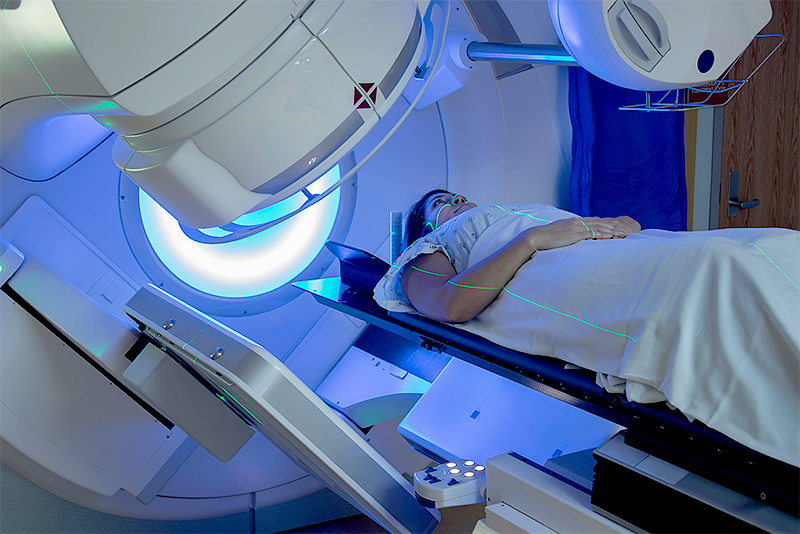
Radiation therapy may be used as part of treatment for selected malignant mediastinal tumors. Its role depends on the diagnosis, stage, surgical findings, risk of recurrence, and whether the tumor can be completely removed.
For thymic tumors, radiation may be considered after surgery in selected higher-risk situations or incorporated with systemic therapy for unresectable or locally advanced disease. Radiation also has an established role in selected lymphoma treatment plans and may be used for other mediastinal malignancies when appropriate.
Modern radiation planning is especially important in the mediastinum because the treatment area may be close to the heart, lungs, esophagus, spinal cord, and other sensitive structures. Radiation oncologists design treatment to deliver the prescribed dose to the tumor while limiting exposure to surrounding healthy tissue.
Coordinating Treatment for Complex Mediastinal Tumors
The most important treatment decision is often determining which therapy should come first. A resectable thymic tumor may proceed directly to surgery, while suspected lymphoma or a malignant germ cell tumor may require biopsy and systemic treatment before an operation is considered. Larger or more invasive tumors may also require treatment before surgery to improve the likelihood of complete removal.
For this reason, complex mediastinal tumors benefit from coordinated review before treatment begins. Thoracic surgery, medical oncology, radiation oncology, pathology, and radiology each contribute information that can affect the sequence and goals of care.
Additional Condition Information
Please see Mediastinal Tumors
Advanced Thoracic Care for Mediastinal Tumors

At Providence Saint John’s Health Center, treatment for mediastinal tumors is based on the specific diagnosis, location, extent of disease, and relationship to surrounding structures. Our thoracic specialists work with medical oncology, radiation oncology, radiology, pathology, and other specialists to determine whether surgery, systemic therapy, radiation therapy, observation, or a combination of approaches is most appropriate.
When surgery is appropriate, minimally invasive and robotic techniques may be used for selected tumors, while open approaches remain important for large or invasive masses that require greater surgical access. The goal is to treat the underlying condition effectively while protecting nearby organs and preserving function whenever possible.
If you have been diagnosed with a mediastinal tumor or mass, our thoracic specialists can help clarify the diagnosis and determine the treatment approach that is right for you.
If you have questions regarding Mediastinal Tumors and Treatment, please call today. Click here to request an appointment.