
Revolutionizing Care with Robotic Assistance
The Center for Minimally Invasive Chest Surgery and Thoracic Oncology is committed to care excellence. At Saint John’s Health Center, our thoracic surgeons are internationally recognized and committed to the best possible outcomes. Our patients come from all over the world to have their operation with our surgical team. For several years, we have treated more new lung cancer patients than any other surgical program in California and maintain the largest volume of Video-assisted Thoracoscopic Surgery (VATS) lobectomies for lung cancer in the world.
Notably, our surgeons have managed over 100 advanced VATS courses for other thoracic surgeons, having performed minimally invasive chest operations for almost 30 years. Stanford University cardiothoracic surgery residents and USC PA students come to Providence Saint John’s to learn thoracic surgery.
What is Minimally Invasive Thoracic Surgery?
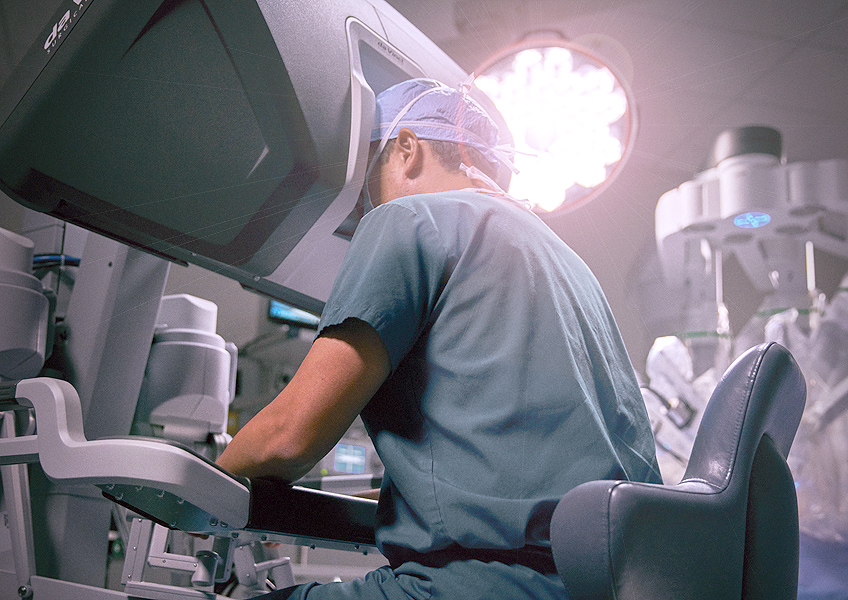
Minimally invasive thoracic surgery, a groundbreaking approach to treating various thoracic conditions, has transformed the landscape of surgical procedures by leveraging advanced technologies such as robotic assistance. This technique offers several advantages over traditional open surgery, including quicker recovery times, reduced pain, and improved patient outcomes. At the forefront of this innovation is robotic thoracic surgery, which combines the precision of robotic systems with the expertise of skilled surgeons to perform intricate procedures with remarkable dexterity.
Robotic Thoracic Surgery
Robotic thoracic surgery, using the da Vinci Surgical System by Intuitive Medical, is a minimally invasive approach that employs robotic arms and advanced imaging technology to facilitate complex procedures within the thoracic cavity. This technique has gained substantial traction due to its potential to enhance surgical precision, minimize tissue damage, and accelerate patient recovery. Unlike traditional open surgery that involves larger incisions, robotic thoracic surgery utilizes several small incisions through which the robotic arms and specialized instruments are inserted. The surgeon then operates these instruments with the assistance of a robotic console, providing a 3D high-definition view of the surgical site.
Other benefits of robotic thoracic surgery using the da Vinci® Surgical robot includes:
- Less tissue trauma
- Less blood loss with fewer blood transfusions
- Reduced risk of infection
What is the benefit of Robotic Surgery for Patients?
One of the most significant benefits of robotic thoracic surgery is its impact on patient recovery and outcomes. Compared to traditional open surgery, which requires larger incisions and extended hospital stays, minimally invasive techniques like robotic-assisted surgery offer shorter hospital stays, reduced post-operative pain, and faster return to normal activities. Patients typically experience less scarring and a lower risk of infection due to the smaller incisions. Furthermore, robotic systems enable surgeons to perform procedures with enhanced precision, which can lead to improved patient outcomes and decreased complications.
Robotic thoracic surgery is particularly well-suited for various thoracic conditions, including lung cancer treatment, lobectomy, and mediastinal tumors. Lung cancer, a prevalent and often life-threatening condition, can be effectively addressed through robotic-assisted surgery. Robotic systems provide the surgeon with a greater range of motion and more intricate control over instruments, enabling the precise removal of tumors while minimizing damage to healthy tissue. Lobectomy, the removal of a section of the lung, is another procedure where robotic assistance shines. The ability of the robotic arms to navigate tight spaces and manipulate delicate tissues enables the surgeon to perform this demanding procedure with exceptional accuracy.
Other conditions include, but are not limited to:
- First Rib Removal for Thoracic Outlet Syndrome
- Thymectomy for Myasthenia Gravis (removal of the thymus gland)
- Esophagectomy (removal of the esophagus for cancer or other disease)
- Treatment for Esophageal Diverticula
- Wedge resection and segmentectomy (removal of a small part of lung tissue that contains cancer
Mediastinal tumors, which occur in the space between the lungs and may involve critical structures like the heart and major blood vessels, also benefit from robotic techniques. The precise movements and improved visualization offered by robotic systems enable surgeons to navigate complex anatomical landscapes with greater ease, ensuring the safe removal of tumors while minimizing risks to nearby structures.
How does Robotics extend the abilities of the surgeon?
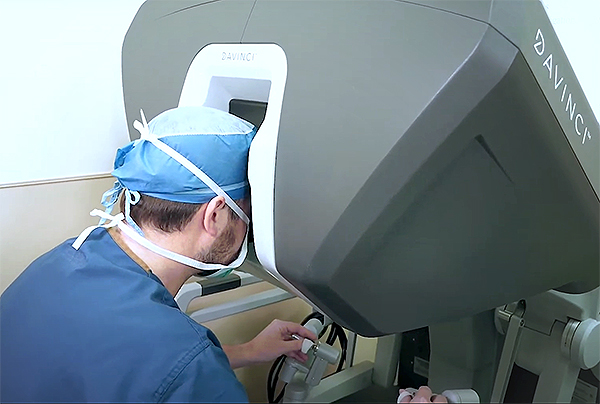
The integration of robotics in thoracic surgery has significantly improved the capabilities of surgeons by providing enhanced dexterity and precision. The robotic arms are equipped with specialized instruments that can mimic the movements of the human hand but on a smaller and more controlled scale. This allows surgeons to perform intricate and precise maneuvers within the confined spaces of the thoracic cavity, which would be challenging to achieve with traditional open surgery. The 3D visualization provided by robotic systems (surgeons viewing monitor) further aids their accurately assessing the surgical site and making informed decisions during the procedure.
Call today to learn more about minimally invasive and robotic surgery. Our care team is ready to support you.
If you have questions about minimally invasive treatments and robotics, please call today. Click here to request an appointment.