
Aquablation is a minimally invasive surgical treatment for benign prostatic hyperplasia (BPH) that uses real-time imaging, robotic technology and a high-pressure waterjet to remove prostate tissue that is blocking urine flow. At Providence Saint John’s Health Center, Aquablation provides another treatment option for men whose enlarged prostate is causing bothersome urinary symptoms.
What Is Aquablation for BPH?

Aquablation uses the AquaBeam® Robotic System to treat urinary obstruction caused by an enlarged prostate. Unlike procedures that use heat to remove prostate tissue, Aquablation uses a heat-free waterjet that is controlled by the robotic system according to a treatment plan created by the surgeon.
The procedure is designed to improve urinary flow and relieve lower urinary tract symptoms associated with Benign Prostatic Hyperplasia (BPH), including frequent or urgent urination, difficulty starting urination, a weak urinary stream and incomplete bladder emptying.
How Aquablation Works
During Aquablation, the surgeon uses real-time ultrasound imaging together with a cystoscopic view of the prostate and urethra to identify the tissue causing urinary obstruction. Specialized software allows the surgeon to map the treatment area according to the patient’s individual prostate anatomy.
Once the treatment plan is established, the robotic system directs a high-pressure waterjet to remove the targeted prostate tissue. The surgeon remains responsible for planning and overseeing the procedure, combining physician judgment with robotic execution of the mapped treatment.
Image-Guided Treatment Planning
One of the distinguishing features of Aquablation is the ability to plan treatment using visualization of the prostate during the procedure. The treatment map helps the surgeon identify tissue that should be removed while considering nearby anatomy involved in urinary and sexual function.
Mehran Movassaghi, MD, explains how Aquablation is used to treat benign prostatic hyperplasia (BPH).
Using the map, we can destroy the tissue that needs to be destroyed without affecting any important tissues that are responsible for continence, or sexual function.
— Mehran Movassaghi, MD
Potential Benefits of Aquablation
Aquablation is designed to provide durable improvement in urinary symptoms while allowing the surgeon to customize treatment to the size and anatomy of the prostate. Clinical studies have demonstrated sustained improvements in urinary symptoms and urinary flow, including follow-up extending to five years.
Improving Urinary Symptoms and Flow
By removing prostate tissue that is compressing the urethra, Aquablation can improve urinary flow and reduce bothersome BPH symptoms such as frequency, urgency, weak stream and difficulty emptying the bladder. The amount and location of tissue treated are planned according to each patient’s prostate anatomy.
Sexual and Ejaculatory Function
Sexual function can be an important consideration when choosing treatment for BPH. Aquablation treatment planning allows the surgeon to consider anatomical structures involved in sexual and ejaculatory function, and clinical studies have shown lower rates of ejaculatory dysfunction with Aquablation compared with traditional transurethral resection of the prostate (TURP).
No BPH procedure can guarantee preservation of sexual or ejaculatory function. Your urologist can discuss these risks alongside the expected urinary benefits when comparing Aquablation with other treatment options.
Treatment Across Different Prostate Sizes
Aquablation has been studied in men with a range of prostate sizes, including larger prostates that can require more extensive treatment with some other approaches. Prostate size, shape, urinary symptoms and other clinical findings are evaluated together when determining whether Aquablation is appropriate for an individual patient.
What Happens During Aquablation?
Aquablation is performed in a hospital or surgical setting with anesthesia. After the surgeon maps the treatment area using real-time imaging, the AquaBeam® Robotic System delivers the waterjet treatment according to the physician’s plan, removing targeted prostate tissue to create a more open urinary channel.
After the waterjet portion of the procedure, the surgeon evaluates the treatment area and completes any additional steps needed to manage tissue and bleeding. A urinary catheter is typically used during the initial recovery period while the prostate and urinary tract begin to heal.
What to Expect After Aquablation
Recovery varies according to prostate size, the extent of treatment, overall health and other individual factors. Patients may be observed in the hospital after Aquablation, and the timing of catheter removal and return to normal activities is determined by the care team based on recovery and urinary function.
Urinary Symptoms During Recovery

Temporary urinary frequency, urgency, burning or discomfort can occur as the prostate and urinary tract heal. Some patients may also notice blood in the urine during recovery. These symptoms generally improve over time, but patients receive instructions about symptoms that should prompt a call to their care team.
Returning to Normal Activities
Many patients are able to resume routine activities relatively soon after treatment, although strenuous exercise, heavy lifting and sexual activity may need to be limited during the initial healing period. Your urologist will provide individualized guidance based on the procedure and your recovery.
Risks and Considerations
Aquablation is a surgical procedure, and potential benefits should be considered alongside its risks. Possible complications can include bleeding, urinary tract infection, temporary difficulty urinating, urinary irritation or discomfort, and changes in ejaculation or sexual function. Additional treatment may occasionally be necessary if urinary symptoms persist or return over time.
Your urologist will review the risks most relevant to you based on prostate anatomy, urinary function, medications, other medical conditions and previous prostate treatment.
How Long Do Aquablation Results Last?
Clinical studies following patients for five years have demonstrated sustained improvement in urinary symptoms and urinary flow after Aquablation, with relatively low rates of additional BPH treatment during that period. Longer-term outcomes will continue to become clearer as patients treated with Aquablation are followed over time.
As with other treatments for BPH, no procedure can guarantee that urinary symptoms will never return. Continued urologic care allows new or recurrent symptoms to be evaluated if they develop.
Is Aquablation Right for Me?
Aquablation may be considered for men with bothersome urinary symptoms caused by BPH when medication is not providing adequate relief, causes unwanted side effects or when a procedural treatment is otherwise appropriate. Choosing among Aquablation and other BPH treatments depends on more than prostate size alone.
Personalizing BPH Treatment
Your urologist may consider the severity of your urinary symptoms, prostate size and anatomy, bladder function, urinary retention, previous treatments, overall health and your priorities regarding recovery and sexual function. Understanding these factors helps determine which treatment offers an appropriate balance of symptom improvement, potential side effects and durability.
Considering Other BPH Treatment Options
Aquablation is one of several approaches available for treating an enlarged prostate. Some patients may benefit from medication or another minimally invasive or surgical procedure depending on their symptoms and anatomy. You can learn more about how BPH is evaluated and treated on our Benign Prostatic Hyperplasia (BPH) page.
About the AquaBeam® Robotic System
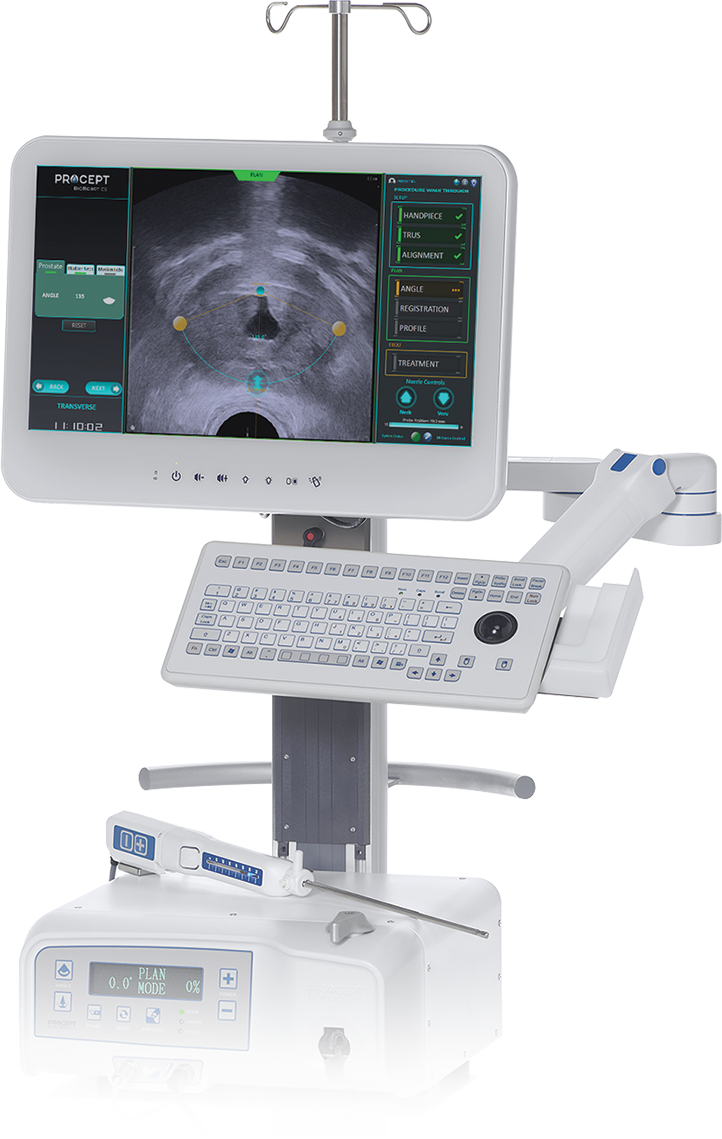
The AquaBeam® Robotic System is the technology used to perform Aquablation therapy. The system combines real-time ultrasound imaging, treatment-planning software and robotically controlled delivery of a heat-free waterjet to remove targeted prostate tissue.
Real-Time Imaging and Treatment Planning
During the procedure, ultrasound imaging and cystoscopic visualization help the surgeon evaluate the prostate and urinary channel while planning the treatment area. The surgeon uses this information to identify the prostate tissue contributing to urinary obstruction and create a treatment map based on the patient’s anatomy.
Robotic Execution With Surgeon Control
Once the treatment plan is established, the robotic system delivers the waterjet according to the surgeon-defined treatment map. The technology provides automated execution of the planned tissue removal while the surgeon remains responsible for treatment planning and oversight throughout the procedure.
Learn more about the AquaBeam® Robotic System from PROCEPT BioRobotics.
Aquablation at Providence Saint John’s Health Center
At Providence Saint John’s Health Center, Aquablation is performed as part of a personalized approach to BPH treatment. Our urology specialists evaluate urinary symptoms, prostate anatomy and individual treatment priorities before recommending a procedure, helping patients understand both the expected benefits and potential tradeoffs of their options.
Mehran Movassaghi, MD, Director of Men’s Health at Providence Saint John’s Health Center, provides evaluation and treatment for men with BPH and other conditions affecting urinary and sexual health.
If an enlarged prostate is interfering with your urinary function or quality of life, our urology specialists can help determine whether Aquablation or another BPH treatment may be appropriate for you.
If you have questions about Aquablation Therapy®, please call today. Click here to request an appointment.