Testicular cancer is uncommon overall but occurs most often in younger men. It frequently begins as a painless lump, swelling or other change in one testicle and is highly treatable, including many cancers that have spread beyond the testicle. At Providence Saint John’s Health Center and Saint John’s Cancer Institute, prompt evaluation helps determine the type and extent of the cancer and the most appropriate treatment.
What Is Testicular Cancer?
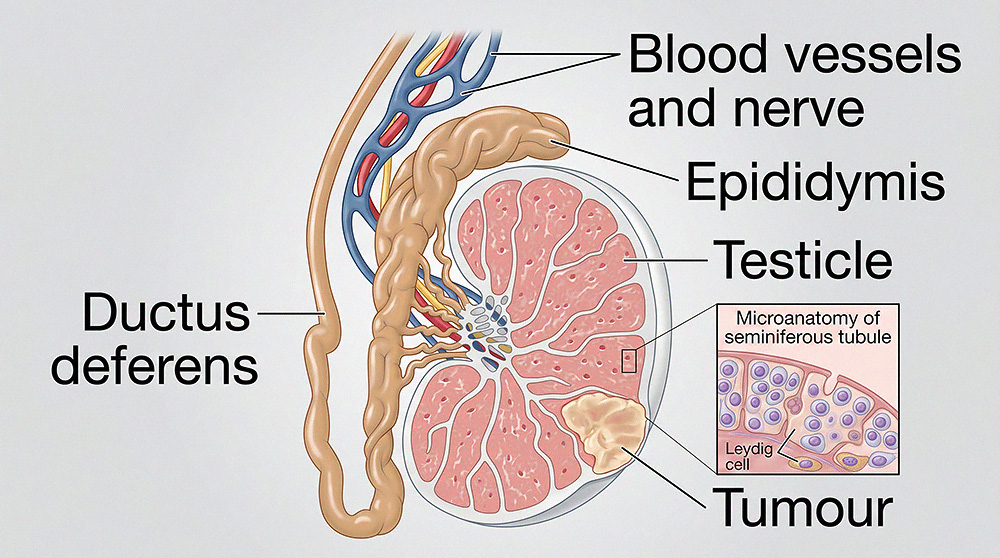
The testicles, or testes, are part of the male reproductive system and are located within the scrotum. They produce sperm and the hormone testosterone. Testicular cancer develops when abnormal cells within a testicle begin to grow uncontrollably and form a tumor.
Most testicular cancers begin in germ cells, the cells involved in sperm production. The two principal types of testicular germ cell tumors are seminomas and nonseminomas. Identifying the type is important because these cancers can behave differently and may require different treatment approaches.
Seminoma
Seminomas generally grow and spread more slowly than nonseminomas and are particularly sensitive to certain treatments. They most commonly occur in young and middle-aged adults but can develop later in life as well.
Nonseminoma
Nonseminomas include several types of germ cell tumors and tend to occur at younger ages. They can sometimes grow and spread more rapidly than seminomas. Tumors containing both seminoma and nonseminoma components are generally treated according to the nonseminoma treatment approach.
What Are the Signs and Symptoms of Testicular Cancer?
Testicular cancer usually affects one testicle. Some tumors are discovered by a patient after noticing a lump or other change, while others may be identified during a medical examination or evaluation for another concern. Testicular cancer does not always cause pain.
Changes to Watch For
A new lump, swelling, enlargement or persistent change in a testicle should be evaluated by a healthcare professional. Symptoms can also be caused by conditions other than cancer, so the presence of a testicular change does not by itself mean that cancer is present.

- A lump, firmness or swelling in a testicle
- A change in the size or shape of a testicle
- A feeling of heaviness in the scrotum
- Pain or discomfort in a testicle or the scrotum
- A dull ache in the lower abdomen or groin
- A sudden collection of fluid in the scrotum
- Breast enlargement or tenderness in some hormone-producing tumors
- Persistent back pain when disease has spread to lymph nodes or other areas
When Should a Testicular Change Be Evaluated?
A new lump or persistent change in the size, shape, firmness or feel of a testicle should not be ignored. Many testicular changes are caused by noncancerous conditions, but an examination and ultrasound can help determine the cause. Prompt evaluation is particularly important because testicular cancer is highly treatable when appropriately diagnosed and managed.
Dr. Jennifer Linehan discusses testicular cancer facts.
Urologic oncologist Dr. Jennifer Linehan discusses testicular cancer and recognizing changes that should be evaluated.
What Increases the Risk of Testicular Cancer?
Most people who develop testicular cancer do not have an obvious cause. Certain medical, developmental and family-history factors, however, are associated with a higher risk of developing the disease.
Undescended Testicle
An undescended testicle, or cryptorchidism, is one of the strongest established risk factors for testicular cancer. Risk remains increased even when the testicle is surgically moved into the scrotum, although corrective surgery is important for examination, fertility and other aspects of testicular health.
Personal and Family History

Having previously had cancer in one testicle increases the risk of developing cancer in the other testicle. Risk is also higher for people with a close family member, particularly a brother or father, who has had testicular cancer.
Testicular Development and Germ Cell Neoplasia in Situ
Certain conditions affecting testicular development are associated with increased risk. Germ cell neoplasia in situ (GCNIS) refers to abnormal germ cells within the testicle that can develop into an invasive germ cell tumor and may be identified during evaluation of testicular tissue.
Age and Other Risk Factors
Testicular cancer can occur at any age but is diagnosed most often in adolescents and younger adults. Rates also vary among racial and ethnic populations, although ancestry alone cannot determine an individual’s risk. Personal history, family history, testicular development and clinical findings provide more useful information when assessing an individual patient.
How Is Testicular Cancer Diagnosed?
Evaluation of a suspicious testicular lump or change usually includes a physical examination, scrotal ultrasound and blood tests for tumor markers. When findings strongly suggest testicular cancer, the affected testicle is generally removed through the groin with a radical inguinal orchiectomy. Examination of the tissue by a pathologist then determines whether cancer is present and identifies the type of tumor.
Physical Examination and Ultrasound
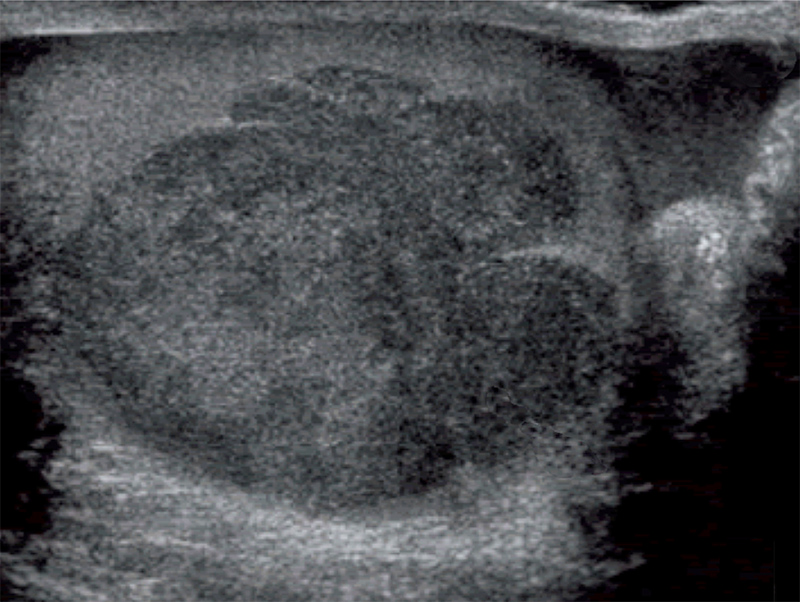
A urologist examines the testicles and scrotum for a lump, swelling, firmness or other abnormality. Scrotal ultrasound uses sound waves to determine whether a mass is located within the testicle and whether it has characteristics that raise concern for cancer. Ultrasound is noninvasive and does not use radiation.
Blood Tests and Tumor Markers
Blood tests can measure tumor markers that may be produced by some testicular cancers. Important markers include alpha-fetoprotein (AFP), beta-human chorionic gonadotropin (beta-hCG) and lactate dehydrogenase (LDH). These results can help physicians characterize the cancer, establish a baseline before treatment and monitor the disease after treatment.
Why Isn’t a Testicular Tumor Usually Biopsied?
Unlike many other tumors, a suspicious mass within the testicle generally is not diagnosed with a needle biopsy through the scrotum. When examination, ultrasound and other findings strongly suggest testicular cancer, the standard approach is usually radical inguinal orchiectomy, in which the affected testicle is removed through an incision in the groin.
This approach allows the tumor to be removed and examined by a pathologist while avoiding a scrotal biopsy that could disrupt normal lymphatic drainage and complicate subsequent treatment planning.
Pathology After Orchiectomy
The removed tissue is examined to determine whether cancer is present and whether the tumor is a seminoma, nonseminoma or another less common type of testicular tumor. Pathology findings are combined with tumor-marker results and imaging to determine the stage and guide further treatment.
How Is Testicular Cancer Staged?
After testicular cancer is diagnosed, staging determines whether the cancer remains confined to the testicle or has spread elsewhere. Imaging, pathology and tumor-marker levels all contribute to this assessment. CT imaging is commonly used to evaluate lymph nodes and other areas where testicular cancer may spread.
Stage I Testicular Cancer
Stage I testicular cancer is limited to the testicle and nearby structures without evidence that it has spread to regional lymph nodes or distant organs. Many patients with Stage I disease can be treated successfully with orchiectomy followed by careful surveillance, although additional treatment may be recommended according to the tumor type and individual risk factors.
Stage II Testicular Cancer
Stage II testicular cancer has spread to regional lymph nodes, most commonly lymph nodes in the retroperitoneum at the back of the abdomen. Treatment depends on whether the cancer is a seminoma or nonseminoma, the size and extent of lymph-node involvement, tumor markers and other clinical factors.
Stage III Testicular Cancer
Stage III testicular cancer has spread more extensively, such as to distant lymph nodes, the lungs or other organs, or meets certain criteria based on tumor-marker levels. Even when testicular cancer has metastasized, many patients can be treated successfully with modern combination therapy.
How Is Testicular Cancer Treated?
Testicular cancer is one of the most treatable solid cancers, including many cases that have spread beyond the testicle. Treatment depends on whether the tumor is a seminoma or nonseminoma, its stage, tumor-marker levels, pathology findings and the patient’s overall health. Some patients need only surgery followed by surveillance, while others benefit from chemotherapy, additional surgery or, in selected cases, radiation therapy.
Radical Inguinal Orchiectomy
Radical inguinal orchiectomy is usually the first treatment when a testicular mass is strongly suspected to be cancerous. During the procedure, the surgeon removes the affected testicle through an incision in the groin. The tissue is then examined by a pathologist to determine the tumor type and other characteristics that help guide further treatment.
Removal of one testicle does not necessarily result in loss of sexual function, testosterone production or fertility. When the remaining testicle is healthy, it can often continue producing adequate testosterone and sperm. Individual circumstances vary, however, and reproductive and hormonal health should be discussed as part of treatment planning.
Explore Surgery for Urologic Cancers”>Surgery for Urologic Cancers.
Surveillance After Surgery

For many patients with Stage I testicular cancer, orchiectomy may be followed by active surveillance rather than immediate additional treatment. Surveillance is a structured follow-up strategy designed to detect recurrence early while allowing patients who are unlikely to relapse to avoid unnecessary chemotherapy, radiation or additional surgery.
The surveillance schedule depends on the type and characteristics of the cancer and may include physical examinations, tumor-marker blood tests and imaging. Following the recommended schedule is important because testicular cancer that returns can often still be treated successfully when detected promptly.
Retroperitoneal Lymph Node Dissection
Retroperitoneal lymph node dissection (RPLND) removes lymph nodes from the back of the abdomen, an area where testicular cancer commonly spreads. RPLND is used for selected patients, particularly in the management of certain nonseminomas or residual disease after other treatment.
The surgical approach depends on the individual patient’s disease and anatomy. Minimally invasive or robotic approaches may be appropriate in selected circumstances when performed by surgeons with the necessary expertise, while open surgery remains important in other clinical situations.
Chemotherapy
Cisplatin-based combination chemotherapy is highly effective against many testicular germ cell tumors and plays an important role when cancer has spread beyond the testicle or when the risk of recurrence warrants additional treatment. The specific chemotherapy regimen and number of treatment cycles depend on the tumor type, stage, risk classification and previous treatment.
Radiation Therapy
Seminoma is particularly sensitive to radiation, and radiation therapy can be considered in selected patients depending on the stage and location of disease. Its role has become more selective as surveillance and chemotherapy strategies have evolved. Nonseminomas generally are not treated with radiation as a primary treatment approach.
Explore Radiation for Urologic Cancers.
Fertility and Hormonal Health
Because testicular cancer often affects younger adults, fertility and hormonal health are important parts of treatment planning. Cancer itself and treatments such as chemotherapy, radiation or retroperitoneal lymph node surgery can affect sperm production or fertility in some patients.
Fertility Preservation Before Treatment
Patients who may want biological children in the future should have an opportunity to discuss fertility before beginning treatment that could impair sperm production or reproductive function. Sperm banking may be recommended before chemotherapy, radiation or certain surgeries when clinically appropriate.
Testosterone and Sexual Function
When one healthy testicle remains after orchiectomy, it can often produce enough testosterone to maintain normal hormonal and sexual function. Patients who develop symptoms of low testosterone or have concerns about sexual or reproductive health can be evaluated and treated according to their individual needs.
Follow-Up After Testicular Cancer Treatment
Follow-up is an essential part of testicular cancer care whether a patient receives surveillance alone or additional treatment. The schedule is individualized according to tumor type, stage and treatment and may include clinical examinations, tumor-marker testing and imaging to watch for recurrence.
Long-term care can also address the effects of treatment, including fertility, testosterone levels and other health concerns. Patients should continue recommended follow-up even when they feel well because recurrent disease may initially cause no symptoms.

At Providence Saint John’s Health Center and Saint John’s Cancer Institute, treatment is tailored to the type and stage of testicular cancer and the needs of each patient.
Our specialists consider cancer control alongside fertility, hormonal health and long-term quality of life when developing a treatment plan.
If you have questions regarding treatments for testicular cancer, or possible symptoms, please call today. Click here to request an appointment on line.